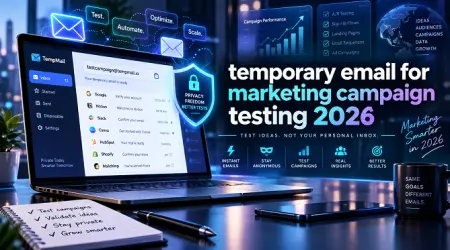
The 2026 Survival Guide to Temporary Email: Why Your Inbox Needs a Bodyguard
Let’s be real for a second. We have all been there. You are browsing the web, you finally find that PDF guide, software trial, or discount code you were looking for, and then—wham. The gatekeeper appears.
“Please enter your email address to unlock this content.”
Your heart sinks a little. You know exactly what happens next. If you hand over your real email address, you aren't just getting a PDF. You are signing up for a lifetime subscription to a newsletter you never asked for, three "follow-up" sales emails a week, and the vague uneasiness that your personal data has been sold to a third-party marketing firm.
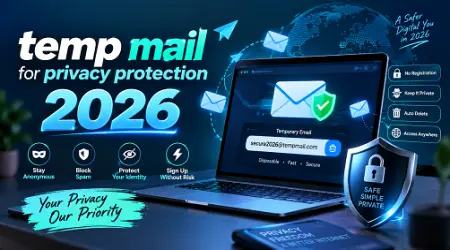
In 2026, where digital privacy feels like a luxury we can’t afford, the temporary email is your first line of defense. Specifically, the 10-minute email.
It is the digital equivalent of a burner phone. It does the job, it leaves no trace, and when you are done, it disappears into the ether.
I have spent the last decade working in SEO and content strategy, watching the war between spammers and privacy advocates escalate. I’ve seen how aggressive data harvesting has become. In my experience, using a disposable email isn't just a "hack" anymore; it is essential hygiene for anyone who spends time online.
If you are tired of waking up to 5,000 unread messages, this guide is for you. Let’s dive deep into the world of short-term inboxes, how they work, and why they are your best friend in the modern web.
What Exactly is a 10-Minute Temporary Email?
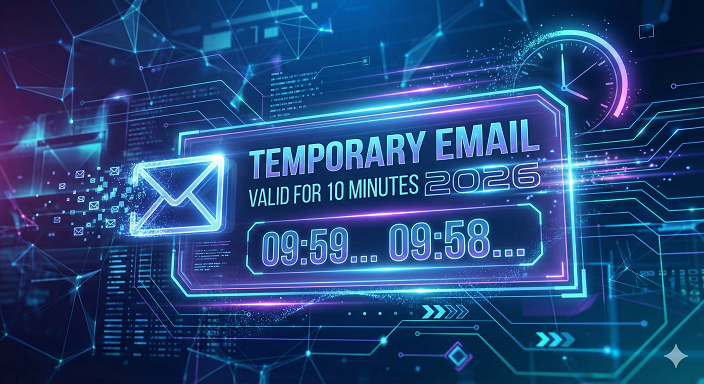
At its core, a temporary email (often called a disposable email or burner email) is a service that gives you a randomly generated email address that is valid for a short period—usually around 10 minutes, though some last for an hour or until you close the browser tab.
Think of it like a rental car. You don't own it. You don't need to change the oil or worry about the maintenance. You just use it to get from Point A (signing up) to Point B (verifying your account), and then you hand the keys back.
The process usually looks like this:
- You visit a 10-minute email site.
- The site instantly generates a unique address (e.g., [email protected]).
- You copy that address and paste it into the signup form you are trying to bypass.
- You watch the temporary inbox on the site.
- The verification email arrives, you click the link, and you never think about that email address again.
It is simple, elegant, and incredibly effective at keeping your primary inbox clean.
Why Do We Even Need Disposable Emails in 2026?
You might be thinking, "Can't I just hit unsubscribe?"
Technically, yes. But if you have ever tried to unsubscribe from a persistent marketing list, you know that "unsubscribe" buttons can sometimes be a placebo. Worse, in some darker corners of the web, clicking unsubscribe actually confirms to spammers that your email is active, leading to more spam.
Here is why a short-term email is superior:
1. The "Clean Inbox" Philosophy Your primary email is your digital home. It’s where your bank statements, family photos, and job offers go. Every time you give that address to a random website, you are letting a stranger into your living room. A disposable email keeps the strangers on the front porch.
2. Avoiding Data Breaches It seems like every week there is a major news story about a database leak. If you use your real email on a sketchy forum or a low-security e-commerce site and they get hacked, your email is now on the dark web. If you used a temporary address? It doesn't matter. That address ceased to exist 10 minutes after you used it.
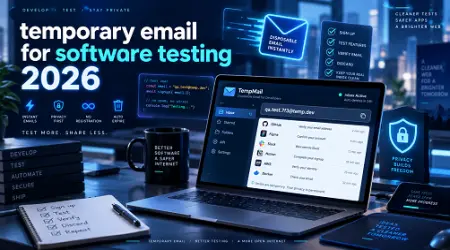
3. Testing and Development I work with developers and QA testers constantly. When you are building an app that requires a user login flow, you need to test the signup process hundreds of times. You can't use your own Gmail for that. An email generator is a developer's best friend, allowing for infinite rapid-fire testing without account conflicts.
See here…….Understanding the Importance of a TH9 Farming Base
How Temporary Email Services Actually Work
You don’t need to be a tech wizard to use these, but understanding what’s happening under the hood is helpful, especially when you run into sites that try to block them.
When you load a temporary inbox site, the service provider has a pool of domain names (like @mail-temp.com or @throwaway.net). They have configured their mail server to accept all incoming mail for these domains.
When you are assigned an address, the system creates a temporary session ID for you on their website. When an email hits their server addressed to your specific temporary ID, their script routes it directly to your browser window via a socket connection or AJAX polling.
The "10-Minute" Limit Explained Why 10 minutes? Is there a timer ticking down on a server somewhere?
Usually, yes. The 10-minute limit is largely a resource management tool. Hosting millions of emails takes up server space. By setting a hard expiry time, these services ensure they aren't storing terabytes of junk mail forever. It purges the system, keeps the service fast, and maintains privacy by destroying the data.
Pro Tip: Most services have a "Refresh" or "Give me 10 more minutes" button. If you are waiting for a slow verification email, make sure you keep an eye on that timer.
Real-World Scenarios: When to Use a Burner Email
I want to give you some concrete examples of when I personally reach for an anonymous email service.
The "Free WiFi" Trap You are at an airport or a coffee shop. You connect to the WiFi, and a splash page pops up asking for your email to get online. You know they are going to sell that data to advertisers who track location habits. Solution: Generate a 10-minute email on your phone, paste it in, click verify, and enjoy your internet without the tracking.
The Gated Content Download You need a whitepaper for work, or maybe a knitting pattern. The website demands an email exchange. You know you will never visit this site again. Solution: Use a disposable address. You get the download link; they get a dead email. Fair trade.
Buying One-Time Items Sometimes you want to buy a gift anonymously, or you are buying from a site that looks a little... unfinished. You want the receipt, but you don't want them to have your primary contact info forever. Solution: Use a temporary email (just make sure you save the receipt PDF immediately!).
The Cat and Mouse Game: Why Some Sites Block Them
Here is something most people don't realize until they try it: Temporary emails don't work 100% of the time.
Big tech companies like Facebook, Netflix, and Google are smart. They know that people use disposable emails to abuse free trials (Netflix doesn't want you getting a new free month every 30 days).
These companies maintain "blocklists" of known disposable domains. If you try to sign up with @10minutemail.com, the form might turn red and say, "Please enter a valid email address."
How to get around this? This is where the quality of the service matters. Premium or high-quality email generator sites frequently rotate their domain names. They might buy a mundane-looking domain like @consulting-solutions.io to trick the filters.
If you get blocked, don't give up. Just hit "change" or "new address" on your tool until you get a domain that doesn't look like spam.
A Critical Warning: When NOT to Use Temporary Email
I cannot stress this enough. While I am a huge advocate for online privacy, there are times when using a disposable email is a terrible idea.
1. Banking or Financial Services Never, ever use a temporary email for PayPal, crypto exchanges, or your bank. If you ever get locked out of your account or need to reset your password, that email address is gone. You will lose access to your money.
2. Important Medical or Government Accounts If you need to receive lab results or tax documents, use your real email. You need a permanent record of these communications.
3. Long-term Purchases (Warranties) If you buy a laptop and send the receipt to a 10-minute email, good luck claiming the warranty two years later when the motherboard dies. You won't have the proof of purchase.
4. Accounts You Care About If you are building a legitimate Instagram following or a LinkedIn profile, use a real address. If the platform suspects bot activity and asks you to re-verify via email, and that email no longer exists, your account is toast.
Pros and Cons of Short-Term Email
To help you decide if this is the right move for your current task, let’s break it down.
The Pros:
- Total Anonymity: No personal info is linked to the address.
- Zero Spam: Once the time is up, the spam stops.
- Speed: No registration required. Just open the page and copy the text.
- Security: Protects your real identity from potential hacks.
The Cons:
- No Recovery: Once it’s gone, it is gone forever.
- Limited Functionality: You usually cannot send emails, only receive.
- Site Blocking: Some strict websites won't accept them.
- Shared Domains: Technically, anyone with the same address could see the emails (though the chances of someone guessing your random string in that 10-minute window are astronomically low).
How to Choose the Best Service in 2026
Not all email services are created equal. In 2026, the tech has evolved. Here is what you should look for when choosing a tool:
Auto-Refresh Features The best tools automatically refresh the inbox without you needing to reload the page. This is crucial when you are waiting for that verification code.
Domain Variety Look for a service that offers a dropdown menu of different domains. If the first one is blocked, you want to be able to switch instantly.
Mobile Responsiveness You will likely use this on your phone just as often as your desktop. The site should be clean, readable, and easy to copy/paste from on a small screen.
SSL Encryption Ensure the site uses HTTPS. Even though the email is temporary, you don't want the connection to be snooped on while you are using it.
See here……Spectrum WiFi Connected But No Internet? Fix It in 5 Minutes
Advanced Privacy: Disposable vs. Alias Emails
As we look at the landscape in 2026, there is a distinction worth making. There are disposable emails (the 10-minute kind) and alias emails.
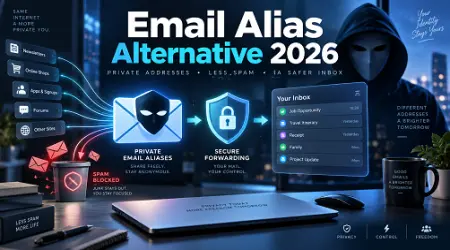
Big tech providers (like Apple with "Hide My Email" or Firefox Relay) offer aliases. These are random addresses that forward to your real inbox.
Which one should you use?
- Use 10-Minute Email when you want zero relationship with the sender. You never want to hear from them again.
- Use an Alias when you do want the emails (like a receipt or a newsletter), but you don't want to reveal your primary address. You can turn off the alias later if they start spamming.
Understanding this difference is key to mastering your online privacy.
Common Mistakes Users Make
In my years of advising on digital strategy, I see people make the same slip-ups with these tools.
Mistake #1: Closing the tab too soon. You sign up, you wait 5 seconds, you don't see the email, and you close the tab. Wait! Some verification emails take 2-3 minutes to arrive. Keep the tab open until you have clicked the link.
Mistake #2: Using it for password recovery. Do not use a temporary email as a "backup email" for your main Google or Microsoft account. If you get locked out, that backup email won't exist to save you.
Mistake #3: Forgetting to extend the timer. If you are filling out a long form, the 10-minute timer might run out before you hit submit. Most sites have a button to reset the clock. Hit it before you start typing in the form.
Frequently Asked Questions (FAQ)
Q: Is using a temporary email illegal? A: Absolutely not. It is perfectly legal to use a disposable email address. However, using one to commit fraud or harassment is, obviously, illegal. Using it to avoid spam is just smart.
Q: Can I send an email from a 10-minute address? A: Generally, no. Most of these services are "receive only" to prevent spammers from using them to send out junk mail. If they allowed sending, the domains would be blacklisted globally in seconds.
Q: Are these emails truly private? A: They are private in the sense that they aren't linked to your name. However, the connection isn't always encrypted end-to-end like ProtonMail. Don't send sensitive government secrets through them.
Q: What happens if I accidentally close the browser? A: In most cases, the session is lost and the email is gone. Some services use cookies to remember you for a few minutes, allowing you to re-open the tab and see the same inbox, but don't count on it.
Q: Can I create a custom address? A: Some premium versions of these tools allow you to pick a custom name (e.g., [email protected]), but the free versions usually assign random strings.
Conclusion: Take Back Control of Your Inbox
In 2026, your attention is your most valuable currency. Every time a company demands your email address, they are asking for a slice of your attention. They want the ability to ping you, notify you, and sell to you at their convenience.
The 10-minute temporary email is your way of saying, "No, thanks."
It is a simple, powerful tool that restores the balance of power. It allows you to explore the internet, access the resources you need, and interact with new services without the fear of a cluttered inbox or compromised privacy.
So, the next time a website holds a download hostage in exchange for your personal details, don't hesitate. Open a new tab, generate a temporary email, and protect your digital peace of mind. Your future self—and your clean inbox—will thank you.