How Are Temp Mails Detected? (Complete Guide)
Email is now a massive area of online communication in a digital world. Official email accounts such as Gmail and Outlook, however, are also supported by temporary email services, also referred to as temp mails or disposable emails.
These disposable inboxes are common among the users who prefer to gain instant access and do not want to divulge their personal email. Nonetheless, temp mails are a source of concern to businesses, which can facilitate fake completeions, spam, and fraud.
So, how are temp mails detected? Let’s break it down step by step.
Introduction to Temporary Emails
What Are Temporary Emails?
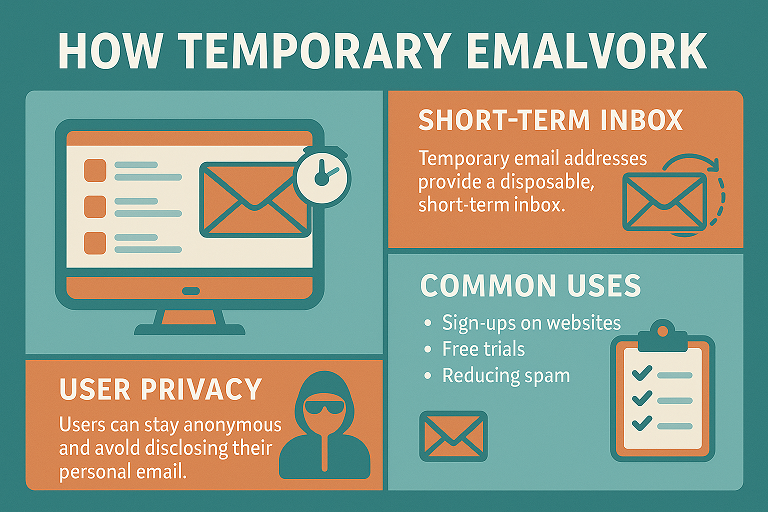
Web-based temporary email services are inbox email accounts that are self-destructed and used on a temporary basis. They can take several minutes to several hours and enable the users to get confirmation links without having to use their actual email address.
Why Do People Use Temp Mail Services?
People use temp mails for reasons like:
- Getting spam out of their personal box.
- Getting free trials without having to commit.
- Securing their identity on the Internet.
Risks and Misuses of Temp Mail
While they have legitimate uses, temp mails are often abused for:
- Creating fake accounts.
- Bypassing web filters.
- Carrying out frauds.
How Websites Detect Temporary Emails
Domain Blacklists and Disposable Email Databases
Websites are subscribing or keeping a database with thousands of known disposable email addresses (such as those of mailinator.com or 10minutemail.com and so on). In the event one attempts to oversubscribe to one, then the system blocks it instantly.
Real-Time Email Verification APIs
Verification APIs are currently utilized on modern websites that verify the validity of email addresses instantly. Disposable domains can immediately be identified by these APIs.
Syntax and MX Record Validation
One of the easiest, but useful techniques is to test the syntax of the email message, and verify its MX records (mail server settings). In case the server is that of a disposable provider, it is rejected.
Behavioral Analysis and Sign-Up Patterns
Online sites can also monitor user activity, e.g. numerous IP-based registrations, or abnormally high levels of sign-ups, both of which suggest the existence of temp mails.
Advanced Techniques Used in Temp Mail Detection
Machine Learning and AI-Based Detection
The patterns of disposable domains are analyzed with AI models and are identified more quickly than lists.
IP Address and Server Reputation Monitoring
Low-reputation IPs are common shared by disposable email servers and therefore are easy to flag.
Email Engagement Tracking
When there are so many users who never open newsletters and bounce back, this indicates that temp mails were being used.
Why Businesses Block Temporary Emails
Preventing Fake Registrations
User numbers can be artificial, which is destructive to analytics, with temp mails being used to boost them.
Protecting Marketing Campaigns and ROI
When marketing messages are sent to disposable email addresses, the open rates would be reduced - damaging ROI.
Strengthening Cybersecurity Measures
Other temp mail services keep on shifting domain names to evade blacklists.
Can Temp Mail Users Bypass Detection?
Common Evasion Tactics by Temp Mail Providers
Some temp mail providers constantly change domains to avoid blacklists.
Why Bypassing Detection Rarely Works
Nevertheless, as detection systems are a combination of several techniques, they are very hard to evade over time.
Best Practices for Businesses to Handle Temp Mails
Using Email Verification Tools
Services such as ZeroBounce or NeverBounce are used to screen out throw-away email when registering.
Educating Users About Risks
Users can be encouraged to use actual emails by websites that emphasize the advantages of authenticated accounts.
Combining Multiple Detection Layers
There is no foolproof method, but making sure to verify, blacklist and AI is even more secure.
FAQs on Temp Mail Detection
Q1: What do the websites do to block temp mails?
Due to the fraudulent registrations, the diminished marketing performance, and the connection of these to fraud, they create fake registrations.
Q2: Is it possible to circumvent the temp mail detection?
It might be temporary in the short run, but new areas are rapidly overtaken by modern tools.
Question 3: How can companies tell whether an email is fake or not?
They employ black lists, DNS lookups and real time APIs.
Q4: Are Disposable emails illegal?
No, though it is permitted to use them in fraud or spam.
Q5: How is a temp mail different to a throwaway email?
They are frequently identical- both are short term.
Q6: Is it possible to detect temp mails in Gmail or Outlook?
Yes, they can tend to block questionable domains or deem them as spam.
Conclusion – The Future of Temp Mail Detection
Temp mails are not likely to vanish any time soon. These services will continue to exist provided that individuals desire privacy or spam protection. However, companies need to shield themselves against fraud and that is the reason why temp mail detectors are advancing at a fast pace through AI and machine learning.