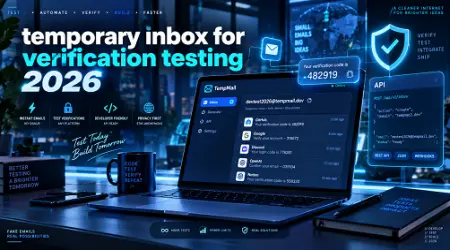
The Ultimate Guide to Instant Temporary Email for OTP Verification in 2026
We have all been there. You discover a new app, a promising app, a software tool, or an exclusive discount code on the Internet. You are very eager to try it out, but then you hit a familiar roadblock, the mandatory email signup form.
You know what happens next and you know it will. If you give out your primary email address your inbox mail will be filled every day with daily newsletters, promotional offers, and spam for the rest of the year. Worse, your data may be sold to 3rd party advertisers or become part of a corporate data breach.
What people are not aware of is that you don't have to give up your personal inbox to get a one-time password. The landscape of digital privacy has changed dramatically and the best solution at present is to use of instant temporary email for OTP Verification.
In this comprehensive guide, we will break down exactly how disposable email services work, why they are essential for your digital hygiene in 2026, and how to make sure you use them safely without getting blocked by overzealous security filters.
Why the Inbox is Broken (And How Temporary Emails Fix It)
Think of the email primarily created years ago. Chances are, it is buried at the bottom of your email inbox under thousands of unread promotional emails right now.
Every time you sign up for a new service you are basically exchanging your personal contact information in exchange for access. Companies use this data to create a profile on you, track your purchasing habits and bombard you with targeted marketing. It is an annoying cycle that makes managing your digital life incredibly stressful.
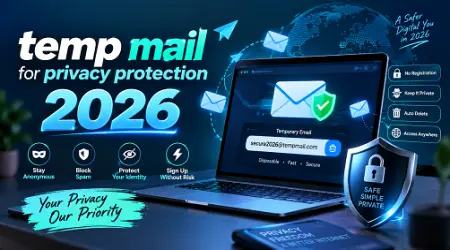
A temporary email to be used for OTP (One Time Password) verification provides a digital shield. It takes that initial confirmation code and lets you log into your account and then vanishes into the ether. You get access that you need and the company gets a disposable address that it can't use to track or spam you.
The Rise of Aggressive Data Collection
In 2026, data has more value than ever. Companies are not just gathering your email in order to send you newsletters, but they are being fed into massive algorithms to predict your behavior.
Using temporary email addresses reduces this data gathering at its source. You gain control of your digital footprint and make sure that your primary inbox is where you receive important communications from family, friends, work, and other important services such as your bank.
What Exactly is an Instant Temporary Email for OTP Verification?
Let's get the record straight on what we are talking about. An instant temporary email for OTP verification is a temporary and disposable email address that is generated on the fly.
Unlike your standard Gmail or Outlook account, you do not need to provide a phone number, a backup email or even your real name to create one. You simply visit a disposable email provider, click a button and you are immediately handed a unique address.
This address is designed to do one thing, receive incoming mail for a very brief period - usually ranging from 10 minutes to a few hours. When the time expires the email address and messages sent to it are permanently deleted from the server. It is the ideal tool to bypass the mandatory email verification without having to commit to a long-term relationship with a website.
How Disposable Email Services Work: A Step-by-Step Look
The use of an OTP verification email is surprisingly simple. You do not require any technical expertise and complicated software. From a professional perspective, the seamless user experience is the very reason why such tools have become so popular.
Here is exactly how the process unfolds:
Step 1: Generate the Address When you encounter a signup form requiring an email, open a new tab and navigate to a disposable email service. The homepage will immediately generate a random email address for you.
Step 2: Copy and Paste Copy this temporary address and paste it into the signup form on the original website. Hit submit.
Step 3: Wait for the OTP Keep the temporary email tab open. Within a few seconds, the website will send an OTP or a verification link. The disposable inbox operates in real-time, so the message will appear almost instantly.
Step 4: Verify and Discard Open the email, copy your OTP, and paste it back into the signup form. Once your account is verified, you can simply close the disposable email tab. The address will self-destruct shortly after, leaving no trace behind.
Pros and Cons of Using an Email for OTP Verification 2026
While disposable emails are incredibly useful, they are not a perfect fit for every single situation. Understanding the benefits and limitations is crucial for navigating the web safely. Let's look at the reality of using an email for OTP verification 2026.
The Advantages
- Absolute Privacy: You never have to reveal your real identity or primary contact information.
- Zero Spam: Because the address destroys itself, promotional emails bounce off into a void.
- Speed and Efficiency: There are no lengthy registration forms or passwords to remember. It is instant access.
- Protection Against Breaches: If the service you signed up for gets hacked, your real email address remains safe and unconnected to the leaked data.
The Disadvantages
- Account Recovery is Impossible: If you forget the password to an account registered with a temporary email, you can never reset it. The email address no longer exists.
- Blocked by Major Platforms: Some high-security websites (like banks or major social media networks) maintain active lists of known disposable domains and will reject them during signup.
- No Outbound Email: These services are strictly for receiving mail. You cannot use them to reply or send original messages.
Common Mistakes When Using Temporary Email Addresses
Even though the concept is straightforward, it is easy to make critical errors that can lock you out of important accounts. Observation of user behavior highlights a few recurring pitfalls.
Mistake 1: Using Them for Important Accounts This is the biggest error you can make. Never use a temporary email for anything that involves your money, your primary identity, or critical software. If you use a disposable address for a financial app or a primary social media account, you will eventually lose access to it permanently.
Mistake 2: Closing the Tab Too Early Some websites take a few minutes to send their OTP verification email. If you close the tab containing your temporary inbox before the email arrives, you might lose access to that specific address and have to start the signup process all over again.
Mistake 3: Assuming Complete Anonymity While temporary emails protect your inbox, they do not hide your IP address or your location. If you are trying to be completely anonymous online, a disposable email is only one piece of the puzzle. You would also need to consider tools like VPNs to mask your network traffic.
See here….TH13 Best Home CoC Base
Real-World Scenarios: When Should You Use Them?
To make all this practical, let's see a few cases where you need to use OTP verification with instant temporary email - it is the smartest move you can make.
Scenario A: The "Read More" Paywall You are doing research and you find the perfect article, but then you get a pop-up stopping the text from displaying and demanding that you provide your email address to "continue reading." You want to just read this one article, and have no interest in their weekly newsletter. This is the perfect time to take a disposable email, grab the verification link and read your article in peace.
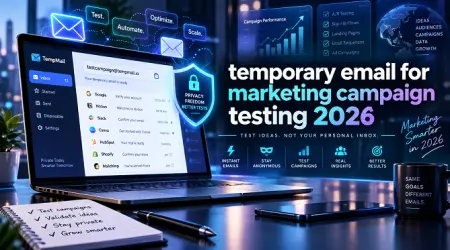
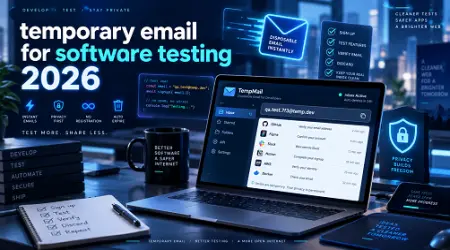
Scenario B: Testing a Software Demo You want to test a new project management tool for your team but they are asking for an email to log in for the 7-day free trial. If you are using your work email, their sales team will call and email you non-stop. By taking advantage of a temporary email for OTP you can try out the software under the radar. If you like it, you can always upgrade to a paid plan in the future using your real corporate address.
Scenario C: Public Wi-Fi Registration You are at an airport or a coffee shop, and the free Wi-Fi requires an email verification to connect. These networks are notorious for selling user data to third-party marketers. Protect your primary inbox by generating a quick temporary address to receive the network's access code.
The Future of Disposable Email Services
As we head further into 2026 the cat and mouse battle between disposable email providers and website administrators is heating up.
Companies are using sophisticated machine learning algorithms to identify and block the creation of temporary email domains as soon as they are made. To get around these filters, disposable email services are quickly recycling new and premium sounding domain names.
What this means to the users is flexibility is key. If a web site refuses your first temporary email address, do not give up. Simply refresh the disposable email generator and you will have an address on a completely different domain, and try again. The technology is continuously adapting to attract the users to maintain their right of inbox privacy.
Frequently Asked Questions (FAQs)
Question 1: Are instant temporary emails legal to use?
Answer: Yes, absolutely. There are no laws prohibiting the use of temporary email addresses for protecting your privacy. However, using them to commit fraud, harassment, or violate a platform's terms of service is where legal issues arise. The tool itself is perfectly legal.
Question 2: Can anyone else read my OTP verification email?
Answer: It depends on the service. Some basic disposable email providers use shared public inboxes where anyone who types in the same address can see the mail. It is highly recommended to use services that generate uniquely randomized addresses to ensure only you have access to that specific inbox during its brief lifespan.
Question 3: How long do these temporary email addresses last?
Answer: The lifespan varies by provider. Some last exactly 10 minutes, while others will stay active for a few hours or as long as you keep the browser tab open. Once the time is up, the data is wiped.
Question 4: Why is a website saying my email is invalid?
Answer: Many modern websites use aggressive filtering tools to block known disposable email domains. If you get an "invalid email" error, the site has recognized the domain. You will need to generate a new address from a different provider or try a service that rotates its domain names frequently.
Question 5: Can I recover an account made with a temporary email?
Answer: No. This is a crucial point to remember. Once the temporary email is destroyed, you can never receive mail at that address again. If the website requires an email verification to reset a forgotten password, you will be permanently locked out of that account.
Question 6: Is there a difference between a disposable email and an alias?
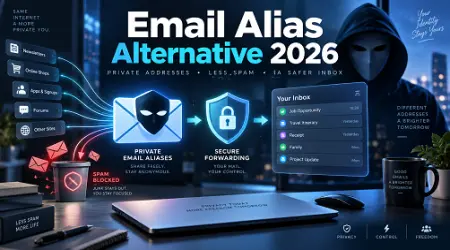
Answer: Yes. A disposable email is temporary and self-destructs. An email alias (like those provided by Apple's "Hide My Email" or privacy services like DuckDuckGo) is a permanent forwarding address. An alias forwards mail to your real inbox, but you can turn it off at any time. Aliases are better for long-term accounts, while temporary emails are best for one-off verifications.
Question 7: Do I need to download an app to use these services?
Answer: Generally, no. The vast majority of disposable email services operate entirely within your web browser. There are dedicated mobile apps available, but for quick OTP verification, navigating to a website is usually the fastest method.
See here…Top digital marketing strategies that work
Conclusion: Taking Back Control of Your Inbox
Managing your digital privacy doesn't need a cybersecurity degree. It is about making smart, everyday choices on who you are sharing your data with.
An instant temporary email for OTP verification is one of the most powerful tools with a good user interface that you have in your hands in 2026. It means that you can move around the web as you like, be able to access all the information and trials you need, and be able to keep your main inbox completely clear of the endless tide of digital marketing.
The next time you receive a website that is very aggressive about having you provide it with your email address to simply show you the discount code, or to be able to read an article, take a second. In order to take back control of your digital life, open a new tab, create a disposable address, and take back control. Your future inbox will thank you.