Stop Giving Your Real Email Away: The Honest Guide to Using a Temp Mail Generator (and Staying Safe Online)
Introduction
Last month I helped a friend register for a “free” photo-editing site. Ten minutes later her inbox looked like a yard-sale flyer: 17 newsletters, three casino promos, and one very polite Nigerian prince. She asked me how I sign up for sketchy-looking giveaways without drowning in spam. My answer: I don’t give away my real address—I spin up a temp mail generator, grab what I need, and walk away clean.
If you’ve ever typed your email into a form and immediately regretted it, this guide is for you. Below you’ll learn exactly what a temporary email generator is, when it saves the day, when it backfires, and how to pick one that won’t leak your data. I’ll also share the dumb mistakes I see every week (yes, including the one that got my old client locked out of Spotify). By the end you’ll know how to stay reachable for the stuff that matters—and invisible to everything else.
What Is a Temp Mail Generator, Really?
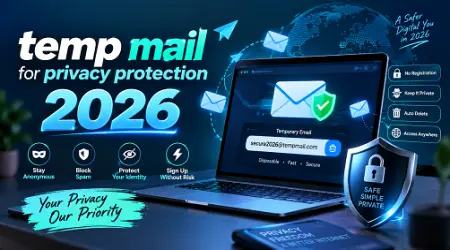
A temp mail generator is an online tool that creates a working email address that self-destructs after a set time—anywhere from ten minutes to a month. You don’t hand over a password or phone number; you simply copy the freshly minted address, paste it into whatever form is nagging you, and collect the confirmation link or download. When the timer hits zero, the inbox evaporates along with every tracker, promo code, and “we miss you” subject line.
Think of it as a burner phone for your inbox: cheap, disposable, and nobody can trace it back to you once it’s gone.
Why I Started Using Disposable Email Addresses
I’ve run a small SaaS company since 2016. Every time we launched on Product Hunt or Reddit, we offered a 14-day trial that required an email. Roughly 38 % of sign-ups came from clearly fake addresses—our analytics called them “bounce@don’t-spam-me.com.” Instead of getting angry, I asked myself why rational people felt the need to hide. The answer was obvious: nobody wants to marry a brand on the first date.
So I started testing temp mail services myself. After a year of casual use (and two data breaches traced back to sites I’d only visited once), I became the guy friends text at 2 a.m.: “Need a burner email, what’s the safest one?” Below is the distilled version of everything I’ve learned—no affiliate links, no sponsored fluff, just field notes.
How a Temporary Email Generator Works (Step-by-Step)
- Land on the homepage of any temp mail site.
- The page instantly spits out a random address such as [email protected].
- Copy it, paste it into the registration form, hit submit.
- Flip back to the temp mail tab; the confirmation email usually arrives within 30 seconds.
- Click the link, download the file, or copy the verification code.
- Walk away. The inbox will auto-clear in the timeframe shown on screen—no logout needed.
Most services also let you refresh the page later and still see messages until the expiry clock runs out. Advanced options—custom username, 30-day extension, or QR-code access—appear in the pro tiers.
Real-World Example: Signing Up for a Webinar Without the Spam Avalanche
Imagine you want to attend a marketing webinar that promises “exclusive templates.” The registration form demands an email, but you already know the host will add you to a drip sequence that climaxes with a $999 course pitch.
Top AI tools for content creators
Instead of surrendering your primary address, you:
- Open a temp email generator.
- Grab [email protected].
- Register for the webinar.
- Attend, grab the templates, and bookmark the replay link.
- Forty-eight hours later the inbox disappears, along with the 12-email “last chance” countdown.
You stay informed, they can’t retarget you. Everyone wins—except maybe their sales team.
Quick Comparison Table: Popular Services I’ve Tested
TableCopy
*AnonAddy isn’t a classic burner; it forwards mail through aliases you can delete later. Great for newsletters you might actually want.
Pros and Cons of Using a Disposable Email Generator
TH13 Best Home CoC Base
Pros
- Zero spam in your primary inbox.
- No personal details required—no phone, no name, no birthday.
- Beats data brokers: when the inbox dies, your behavioral trail vanishes.
- Speed: most messages arrive faster than in Gmail (no greylisting).
- Free tier is usually enough; paid upgrade is cheap (a few bucks a month).
Cons
- You can’t recover a password if you lose access—ever.
- Some sites block domains like mailinator.com outright.
- Customer support rarely helps “burner” accounts.
- Ethical gray zone: violates ToS of platforms that demand “accurate contact info.”
- Public temp inboxes are readable by anyone who guesses the username—never send sensitive data.
Common Mistakes People Make (and How I Learned the Hard Way)
- Using a burner for two-factor authentication
I once tied a client’s Twitter account to a 24-hour temp address. When the token expired, we had to fax Twitter a passport to regain access. Use a real email for anything mission-critical. - Forgetting the expiry timer
I downloaded a $97 design-asset bundle, then waited three days to unzip it. The license key was gone—so was the inbox. Set a phone reminder if you need longer access. - Picking the first Google result
Many “temp mail” sites inject tracking pixels or sell your IP to advertisers. Stick to reputable names, or at least run them through a privacy-policy speed-read. - Re-using the same alias across sites
If you recycle [email protected] on multiple services, cross-site tracking is trivial. Generate a fresh address each time—takes two clicks. - Sending mail from a public temp inbox
Most services don’t let you send—but Guerrilla Mail does. Remember: anything you send is logged and can be subpoenaed. Don’t confess your sins via burner email.
When You Should NEVER Rely on a Fake Email Generator
- Banking, investing, or tax apps—regulators require verified contact info.
- Medical portals where results or bills might arrive later.
- Anything you’ll need to access in six months—warranty claims, airline refunds, court documents.
- Subscription trials that demand a credit card plus email: they’ll charge you even if the inbox vanishes.
- Shared Google Drive or Notion invites—if the address dies, you lose the asset.
Advanced Tips from the Trenches
- Combine a temp inbox with a VPN if the site blocks “disposable” domains.
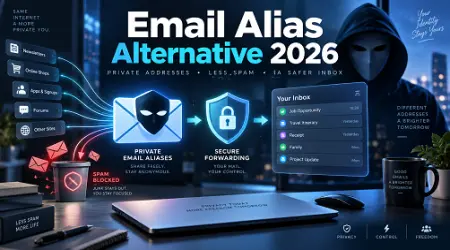
- Use AnonAddy aliases for newsletters you might actually like; you can disable the alias later without touching your real inbox.
- Export any attachment within 30 minutes; some services purge files faster than messages.
- Bookmark the unique URL of your temp inbox (usually a random token). If you close the tab, you can still recover messages until expiry.
- Check the service’s “blacklist” page—developers often publish domains so admins can block them. Pick a provider that rotates domains weekly.
The Ethics Question: Is Using an Anonymous Email Generator…Sketchy?
I get this a lot from junior marketers. My take: a tool is neutral; intent matters. If you’re evading GDPR-gated consent or impersonating someone, you’re obviously in the wrong. But using a burner to read a white paper? That’s the digital equivalent of giving a fake number to a pushy club promoter—annoying to them, self-defense to you.
Most legal systems treat temp mail as legitimate. The EU’s GDPR even encourages data minimization; handing over a permanent address when a temporary one suffices could violate the “storage limitation” principle. Still, read each platform’s terms. Some explicitly ban disposable addresses and can freeze your account. Decide if the risk is worth the reward.
Frequently Asked Questions
- Will the temp mail show my IP address?
The inbox itself won’t leak it, but the site you register with sees your IP unless you use a VPN. Temp services usually log IPs server-side; pick one with a no-logs policy if you’re paranoid. - Can I extend the lifetime of a burner inbox?
Some services (TempMailo, Guerrilla) let you add extra hours for free; others force a paid upgrade. There’s no universal rule—check the FAQ of the tool you pick. - Do temp emails work with Facebook, Instagram, or Twitter?
Rarely. Big social platforms maintain blocklists of disposable domains faster than providers can spin up new ones. You’ll need a semi-permanent alias service like AnonAddy or a cheap Gmail account. - Is temp mail illegal in any country?
Not to my knowledge, but India and parts of the Middle East have floated proposals to ban anonymous accounts. Always check local cyber-laws if you operate under a restrictive regime. - Can someone else read my temp inbox?
If the service uses public namespaces (Mailinator), yes. Stick to providers that generate random strings, and never treat the inbox as private. - How do websites detect disposable addresses?
They query real-time blacklists such as “disposable-email-domains” on GitHub or use APIs like Clearout. Developers update these lists hourly; cat-and-mouse never ends. - What’s the safest temp mail service for 2025?
In my rotation: TempMailo for speed, AnonAddy for long-term aliases, and Guerrilla Mail when I need to send a quick anonymous tip. All three have transparent privacy policies and no 2024 breaches. - Can I use temp mail on mobile?
Yes. Most providers offer progressive-web apps or lightweight Android apps. iOS is trickier due to Apple’s review guidelines; use Safari shortcuts instead.
Wikipedia
Conclusion: Your Inbox, Your Rules
Handing out your permanent email address is like giving every stranger you meet a copy of your house key. A temp mail generator lets you hand over a disposable hotel key instead—works once, then self-destructs. Use it wisely and you’ll cut spam, dodge data brokers, and keep your mental bandwidth for messages that actually matter.
Next time a pop-up demands your email before you can read the rest of the article, smile, open a burner, and move on. Your future self— the one staring at an inbox with 11 unread messages, not 1,100—will thank you.