Title: Stop the Spam, Keep Your Sanity: The Real-World Guide to Using a Temporary Email Address
Introduction
Last summer I sold an old camera on Craigslist. Within ten minutes my inbox looked like a piñata had exploded—fake PayPal receipts, “shipping partner” phishing links, and a newsletter for alpaca sock coupons. I hadn’t given anyone my real address; I’d used a throwaway email. Still, the spam kept coming. That tiny incident reminded me why, after twelve years in digital marketing, I hand out disposable addresses the way dentists hand out floss. If you’ve ever hesitated before typing your real email into a coupon form, or you’re tired of unsubscribe links that never work, this guide is for you. Below I’ll show you exactly how a temporary email address works, when to use one, and the rookie mistakes that can still leave you exposed.
What Is a Temporary Email Address—And Why You Keep Hearing About It
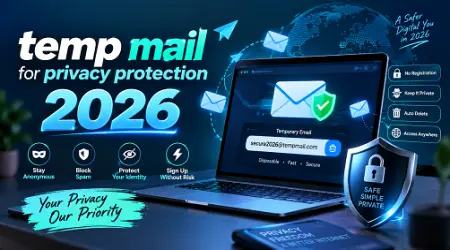
A temporary email address is exactly what it says on the tin: an inbox that lives for minutes, hours, or days, then vanishes. No passwords to remember, no birthday reminders, no loyalty spam. You copy it, paste it, grab the confirmation link, and walk away. Marketers call them disposable email addresses, developers call them burner emails, Reddit calls them temp mail. Same animal, different nickname.
How Is It Different From a “Fake” Email?
People often say “fake email address” when they really mean temporary. A fake address like [email protected] doesn’t exist, so the confirmation email bounces. A temp address does exist—just long enough to receive that confirmation code or download link. Think of it as a hotel room: you occupy it, grab your sleep, and check out. A fake address is like giving the hotel a vacant lot on your registration form—you’re not getting the key.
The 90-Second Setup: Getting Your First Temp Mail Inbox
Step 1: Open a temp mail provider (I still use Temp-Mail.org for quick demos).
Step 2: Copy the auto-generated address—something like [email protected].
Step 3: Paste it into whatever form is nagging you.
Step 4: Refresh the temp inbox, click the confirmation link, download your free ebook or coupon.
Step 5: Close the tab. The inbox dies in 24 hours, taking the follow-up spam with it.
Total keystrokes: about 30. Time saved: untold hours of scrolling past “We miss you” drip campaigns.
Real-World Case Study: Signing Up for a Webinar Without Becoming a “Lead”
My client Sara runs a boutique UX agency. She needs to watch competitor webinars for research, but every registration page threatens to “add her to the community.” We created a three-day burner email, registered, attended, grabbed the slide deck, and let the inbox expire. Result: zero sales calls, zero automated drip sequences, and a happy client who still owns her attention.
When a Temporary Email Address Saves the Day (and When It Backfires)
Good fit:
- One-off coupon codes
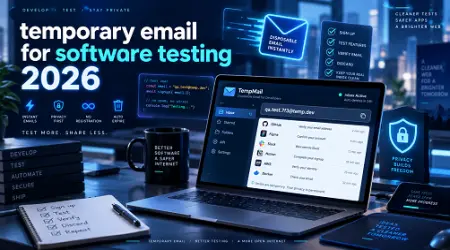
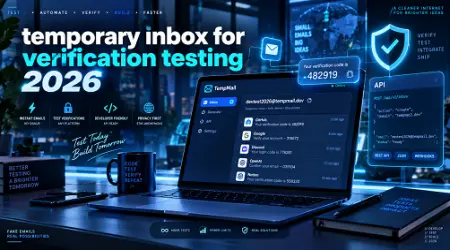
- Beta-testing your own signup flow
- Posting on forums that demand registration
- Downloading public PDFs gated by marketing teams
Bad fit:
- Banking, medical, or tax portals (you’ll need that receipt next April)
- Anything you might want to recover—like a forgotten password
- Long-term subscriptions you actually care about (Netflix, Spotify)
- Sites that forbid disposable domains in their terms (hello, Airbnb)
The Pros and Cons in Plain English
Pros
- Instant privacy: your primary inbox stays lean
- Zero setup: no passwords, no recovery questions
- Spam insulation: trackers can’t follow you home
- Psychological freedom: you’ll click “download” without cringing
Cons
- Short lifespan: lose a receipt and it’s gone forever
- Blacklisted domains: some sites block known temp providers
- No sending: most burner emails are receive-only
- Reputation stigma: overuse can flag you as a “freeloader”
Five Costly Mistakes First-Timers Make
- Using the same burner for multiple important accounts—then watching it expire.
- Forgetting to screenshot order confirmations before the inbox self-destructs.
- Picking a provider that deletes messages every ten minutes when you need two hours.
- Assuming temp mail equals total anonymity—your IP address is still hanging around.
- Handing a burner to a site that later asks for “email verification to unlock your data.” Ouch.
Advanced Tactic: Pairing Burner Emails With Alias Forwarding
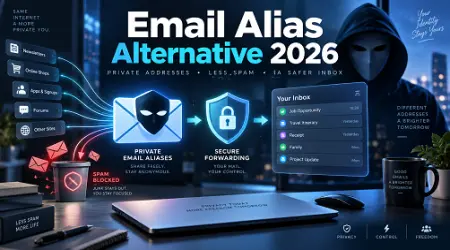
In my agency we layer services. Start with a temp address to pass the gate, then switch to a permanent alias (think Gmail plus-addressing or SimpleLogin) if the newsletter turns out to be valuable. That way you can shut off the alias later without losing your primary inbox. It’s like dating: temp mail is coffee at noon, alias forwarding is dinner and a movie.
Security Myth-Busting
“Temp mail is only for criminals.” Nonsense. Journalists use anonymous email to protect sources. Developers use throwaway inboxes to test login flows. Privacy isn’t suspicious; it’s prudent.
“Disposable addresses are illegal.” Also false. You’re not spoofing someone else’s domain, you’re using a legitimate service that voluntarily hosts short-lived inboxes.
“Hackers can read my temp mail.” Technically true—most inboxes are public. That’s why you never use them for passwords or personal data. Treat them like a postcard, not a sealed envelope.
Provider Shoot-Out: What I Tell Clients After Testing Two Dozen Sites
Longest lifespan: Mailinator (keeps messages for several days, paid tier available)
Prettiest interface: Temp-Mail.org (no account needed, dark mode)
Most private: Guerrilla Mail (lets you scramble the address, uses HTTPS by default)
Best for QA teams: Mailosaur (API access, custom domains)
Avoid: random Chrome extensions that ask for “read all site data” permissions—hello, data harvest.
How Marketers Spot Disposable Domains—And How You Can Still Slip Through
Big brands subscribe to blocklists like Kickbox or Webbula. If the domain is on the list, the form rejects it. Workaround: use lesser-known providers or spin up your own subdomain alias for $6 a year. I’ve seen startups buy “throwaway” domains just to hand out short burner addresses to early adopters. Sneaky? Maybe. Effective? Absolutely.
The Ethics Question: Are You “Cheating” the System?
I’ve sat in rooms where growth hackers foam at the mouth about “lead quality.” Here’s my take: if a company demands an email before showing a pricing page, they’re not entitled to lifetime access to your attention. A temporary email address is the digital equivalent of giving the mall cashier a fake zip code—harmless, reversible, and frankly expected.
BBC
Quick-Reference Table: Which Type of Email to Use When
Need lifetime receipts → Primary Gmail
Need support tickets → Permanent alias
Need webinar slides → Temp mail
Need to comment on a news article → Disposable email
Need to share sensitive documents → Encrypted Proton Mail, not temp
FAQs
Q1. Will using a burner email slow down delivery?
No. Confirmation emails usually arrive within seconds—same speed as any other inbox.
Q2. Can I reply from a temporary email address?
Most providers block outgoing mail. If you need two-way chat, upgrade to an alias service.
Q3. Is temp mail safe for crypto airdrops?
Only if you’re positive you’ll never need to recover the wallet. One lost seed-phrase email and your tokens are gone.
Q4. Do temp providers store my IP?
Some do. If absolute anonymity matters, fire up a VPN first.
Q5. Why did the site reject my temp domain?
They’re using a disposable-domain blacklist. Try a different provider or use your own subdomain.
Q6. Can I extend the life of an inbox?
A few services offer manual extensions. Guerrilla Mail lets you bookmark the session URL, effectively keeping it alive.
Q7. Is there a mobile app for quick burner addresses?
Yes—Temp-Mail.org and 10MinuteMail both have lightweight apps. Don’t grant them notification permissions; you’re here for peace and quiet.
Q8. What happens to expired messages?
They’re wiped from the server, usually forever. Treat them like Snapchat for email.
Wikipedia
Action Plan: Your Next 24 Hours
- Pick one provider from the list above and bookmark it.
- The next time a pop-up dangles a 10 % coupon, paste the burner address.
- Watch your primary inbox stay silent for a week.
- Rinse and repeat until guarding your attention becomes second nature.
Conclusion
Handing out your permanent email to every landing page is like giving your home address to every street vendor. A temporary email address is the cheapest, fastest privacy tool you’re not using yet. In my experience, once you see that empty promotions tab, there’s no going back. Try it once—your future self (and your sanity) will thank you.