Top Reasons to Use a Disposable Email Address in 2026
Picture this: you’re sipping a flat-white in a Melbourne laneway café, scrolling through your phone, when a pop-up promises “20 % off your next order—just enter your email!” You hesitate, remembering the 327 promotional messages already clogging your inbox. You want the discount, but you don’t want the lifelong relationship. Enter the disposable email address—the 2026 life-hack that keeps your real inbox as calm as that café playlist.
Below, we’ll walk through the top reasons smart surfers, shoppers, and side-hustlers are leaning on throw-away emails right now. You’ll get real-world stories, security tips, and a few “aha” moments you can use today. No tech degree required.
What Exactly Is a Disposable Email Address?
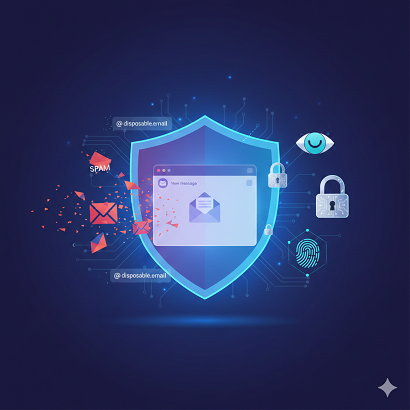
A disposable email address (DEA) is a short-lived inbox you create in seconds—no passwords, no commitments, no spam forever. Services like Temp-Mail, 10MinuteMail, or Guerrilla Mail give you a random [email protected] that self-destructs after a set time or after you close the tab. Some providers let you extend the life for an hour; others vanish in ten minutes. Either way, the goal is the same: hand out an address that isn’t your actual Gmail, Outlook, or iCloud, so the sender can’t follow you home.
Reason #1 – Your Primary Inbox Stays Zen
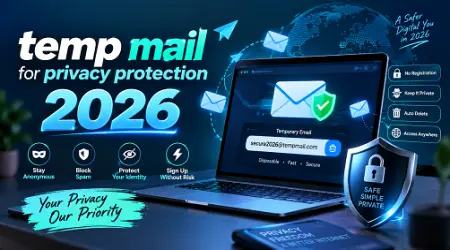
Let’s start with the obvious. Every “free e-book,” every coupon code, every Wi-Fi login at the airport wants an email. Give them your real one and you’ve basically invited a timeshare salesman into your living room. A DEA is the polite but firm “thanks, but no thanks.” You grab the perk, the sender bounces their follow-ups to a burner inbox, and your main account stays curated for messages that actually matter—bank alerts, mum’s photos, that client who pays on time.
Pro move: I keep a “permanent-but-secondary” Gmail for newsletters I might want (think Airbnb, Canva, airline loyalty), and a 10-minute DEA for the one-off downloads I’ll never open again. Three tiers, zero chaos.
Reason #2 – Slash Phishing Risk in Half
Cyber-crime isn’t a hoodied hacker in a basement anymore; it’s automated bots spraying 3.4 billion phishing emails every day. When your real address leaks (and it will), scammers pair it with breached passwords, social profiles, even your last Uber route. A DEA gives them nothing but a crater. The fake inbox dies, the trail goes cold, and credential-stuffing scripts hit a brick wall.
Quick story: last March a friend signed up for a “win an iPhone” survey using her primary email. Two weeks later she got a fake Apple invoice that looked eerily accurate. Because the scammers knew her full name and phone, she almost clicked. Had she used a burner, the phish would never have arrived.
Reason #3 – Test-Drive New Apps Without the Stalker Emails
Developers love onboarding sequences: day-one welcome, day-two tips, day-three “miss you” coupons. Sometimes you just want to poke around a new CRM or AI image generator for five minutes. Spin up a disposable address, click the verification link, poke away, and ghost. If the tool rocks, you can always re-register later with your real ID. If it flops, you’re already forgotten.
Reason #4 – Keep Big Tech From Cross-Linking Your Identity
Meta, Google, and TikTok don’t just want your email; they want to match it to every breadcrumb you’ve left since 2012. Use the same address across platforms and you’re handing them a gold-threaded lasso to rope your data together. A DEA breaks that thread. Researchers at the Electronic Frontier Foundation call it “data compartmentalisation”—fancy words for “don’t put all your eggs in one basket.”
Reason #5 – Dodge the Political & Newsletter Avalanche
Election seasons are inbox tsunamis. One $5 donation to a candidate and suddenly you’re on 14 mailing lists, each begging for “just $3 more before midnight.” Disposable emails let you support the cause, grab the sticker, then ride off into the sunset. Same trick works for marathon charity drives and university alumni funds.
Reason #6 – Protect Freelance Clients’ Confidentiality
If you’re a designer, writer, or dev pitching on Upwork or Fiverr, you often need to share an email for kick-off calls. Handing out your personal Gmail looks amateur and exposes you to off-platform spam once the contract ends. A project-specific burner keeps comms professional and boundaries intact. When the gig wraps, the address dies—no “Hey, can you redo this for free?” messages six months later.
Reason #7 – Shop the World Without Geo-Targeting
Ever notice how flight prices jump the second you revisit the site? Or how that Swedish jacket is 30 % cheaper when you VPN to Germany? Airlines and fashion brands use your email + IP to tailor (or inflate) prices. A disposable address plus incognito mode nukes their tracking. I booked a Bali–Tokyo ticket last month for $180 less than the first quote simply by clearing cookies and checking out with a burner email. Same airline, same day, real savings.
Reason #8 – Avoid the “Unsubscribe Guilt” Trap
We’ve all been there: you meant to hit unsubscribe, but the button is greyed out, or it demands you log in with a password you forgot, or—my personal fave—it takes “up to 10 business days” to process. With a DEA you simply walk away. The inbox evaporates, and the marketer’s “journey” ends at a brick wall.
Reason #9 – Keep Students & Kids Safer Online
Teens sign up for gaming mods, study PDFs, and fan-fiction sites at warp speed. Teaching them to use a disposable address is like digital seat-belts. They still get the content, but their real inbox (and location) stays masked from predators or data brokers. Parent win: you’re not stuck monitoring 47 Fortnite forums.
Reason #10 – Comply With GDPR & CCPA Without the Paper Trail
Privacy laws give you the right to be forgotten, but only if you can prove the data is yours. Irony: the less you expose, the less you need to retract. Using a DEA means companies never had your permanent contact to begin with, so erasure requests become moot. It’s pre-emptive compliance—no lawyers, no 30-day waiting games.
Reason #11 – Stop the Chain of “Partners”
Buried in paragraph 14 of most privacy policies is the clause: “We may share your data with trusted partners.” Translation: your address gets passed around like a plate of tim-tams. A disposable inbox breaks the chain at the first handshake. When the address dies, any downstream resale becomes worthless.
Reason #12 – Run Multiple Social Accounts Hassle-Free
Managing five Instagram theme pages? Good luck doing that from one email. Platforms demand unique addresses, but you don’t need five new Gmail accounts. Spin up burner addresses, verify, switch profiles, done. When a page gets hacked (it happens), the recovery email is already disposable, so the breach doesn’t cascade into your personal cloud.
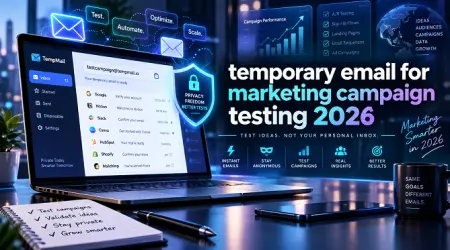
Reason #13 – Test Email Campaigns Like a Pro Marketer
If you send newsletters, you must see how they render on different clients. Sure, you could create 12 Gmail aliases, but that’s a admin nightmare. Disposable addresses let you check Outlook, Yahoo, Proton, and Apple Mail in seconds. Delete the evidence when you’re done—no cluttered test folders left behind.
Reason #14 – Dodge the “Dark Pattern” Renewals
Some subscription services require an email to start a free trial, then hide the cancel button behind three logins and a blood oath. Use a burner and they can’t chase you with “your trial ends tonight” scare-mails. Worst case: the trial lapses, the account locks, and you move on with zero fallout.
Reason #15 – Travel Lighter—Literally
Airlines, hotels, and car-rental desks all want your email at check-in. Hand over your real one and you’ll still be getting “exclusive offers” long after your tan fades. A DEA gives them a working contact for boarding passes, but vanishes once you land. Bonus: if immigration ever demands to see your booking confirmation, you can still pull it up from the disposable inbox for the 24-hour window most providers allow.
How to Pick a Trustworthy Disposable Email Service
Not all burners are equal. Some log your IP, inject ads, or sell the very data you’re trying to shield. Here’s a quick checklist:
- Open-source or transparent privacy policy (check the footer).
- No personal info required—if they want your phone number, walk away.
- HTTPS only—look for the padlock.
- Optional extension: can you stretch the timer if a code arrives late?
- No third-party trackers—open the site in a privacy tab and watch for pop-up ads.
- Self-delete button—lets you nuke the inbox early.
My shortlist for 2026: Temp-Mail.org (quick and clean), Guerrilla Mail (lets you send replies), and Maildrop (permanent-but-anonymous aliases for newsletters you might want). All three are free; tip them a coffee if you like the service.
Quick-Start Guide: Your First Disposable Address in 30 Seconds
- Open a private/incognito browser window.
- Visit your chosen DEA site.
- Copy the auto-generated address.
- Paste it into the signup form that’s nagging you.
- Wait for the verification email to land in the burner inbox (usually under 60 s).
- Click the link, grab the coupon, download the PDF—whatever you came for.
- Close the tab. The inbox dies; you move on.
Advanced trick: if a site blocks “obvious” disposable domains (like @mailinator.com), switch to a service that offers alternate domains—Temp-Mail cycles through 200+ daily. You’ll skate past most blacklists.
Common Myths—Busted
Myth 1: “Disposable emails are illegal.”
Nope. Using a DEA is like using a PO box. You’re not impersonating anyone; you’re limiting exposure.
Nope. Using a DEA is like using a PO box. You’re not impersonating anyone; you’re limiting exposure.
Myth 2: “They’re only for criminals and trolls.”
Tell that to the 62 % of IT managers who recommend burners for staff training phishing simulations (Ponemon Institute, 2025). Legit security tool, full stop.
Tell that to the 62 % of IT managers who recommend burners for staff training phishing simulations (Ponemon Institute, 2025). Legit security tool, full stop.
Myth 3: “Sites will reject you outright.”
Some do, but most only block the best-known domains. Rotate providers and you’ll succeed 9 times out of 10.
Some do, but most only block the best-known domains. Rotate providers and you’ll succeed 9 times out of 10.
Myth 4: “You can’t receive attachments.”
Many services accept files up to 50 MB. If you need longer storage, extend the timer or download the file immediately.
Many services accept files up to 50 MB. If you need longer storage, extend the timer or download the file immediately.
When Not to Use a Disposable Address
- Banking, investing, or tax portals—you’ll need ongoing statements and password resets.
- Medical patient portals—appointment reminders and lab results matter.
- Long-term subscriptions you actually want—Netflix, Spotify, Adobe.
- Government services—visa applications, driver’s licence renewals.
- Anything you might need to recover two years from now.
Think of burners as single-use coffee cups: perfect for a quick hit, terrible for ageing wine.
2026 Trend Watch: Ephemeral Email Meets AI
Start-ups are already baking DEAs into AI assistants. Imagine telling your smart speaker, “Hey, sign me up for that webinar,” and it spins up a burner, registers, fetches the calendar file, then deletes the address once the event ends. No human clicks required. Expect Apple and Google to ship built-in “Hide My Email on steroids” within the next 18 months, making disposable addresses as mainstream as contactless payments.
FAQ – The Questions Everyone Asks
Q1. Will the sender know I used a disposable address?
Only if they aggressively scan domain blacklists. Most e-commerce stores just want a valid inbox; they don’t care beyond that.
Only if they aggressively scan domain blacklists. Most e-commerce stores just want a valid inbox; they don’t care beyond that.
Q2. Can I reply from a disposable address?
Some services (Guerrilla Mail, AnonAddy) allow replies, but most don’t. If you need back-and-forth, use a semi-permanent alias instead.
Some services (Guerrilla Mail, AnonAddy) allow replies, but most don’t. If you need back-and-forth, use a semi-permanent alias instead.
Q3. How long does the inbox stay alive?
Anywhere from 10 minutes to 30 days, depending on the provider. Pick one that matches your task.
Anywhere from 10 minutes to 30 days, depending on the provider. Pick one that matches your task.
Q4. Are disposable emails stored anywhere?
Reputable services wipe servers every 24 hours, but assume any message could be viewed in transit. Never send passwords or credit-card numbers.
Reputable services wipe servers every 24 hours, but assume any message could be viewed in transit. Never send passwords or credit-card numbers.
Q5. Do disposable addresses work for phone-verified accounts?
No—if a site demands SMS verification, you’ll need a real number or a VOIP service. Burners cover email only.
No—if a site demands SMS verification, you’ll need a real number or a VOIP service. Burners cover email only.
Q6. Can I use DEAs on Gmail or Outlook themselves?
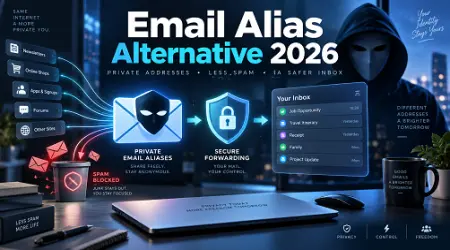
Yes. Both let you create “+aliases” (like [email protected]), but sharp marketers strip the plus part. True disposable domains are safer.
Yes. Both let you create “+aliases” (like [email protected]), but sharp marketers strip the plus part. True disposable domains are safer.
The Bottom Line
Your email address is the skeleton key to your digital life. Handing it out freely is like taping your house key to the front door. Disposable emails are the 2026 upgrade: grab the freebies, dodge the spam, and keep your real inbox for conversations that count. Try one today—close the tab when you’re done, and enjoy the quiet.