Stop Trashing Your Inbox: The Ultimate Guide to Temporary Email for Digital Marketing Tools 2026
If you've been in the digital marketing space for more than a week, you know the struggle. You want to test a new CRM, download a promising lead magnet, or check out a competitor’s onboarding sequence.
You hand over your primary email address. Big mistake.
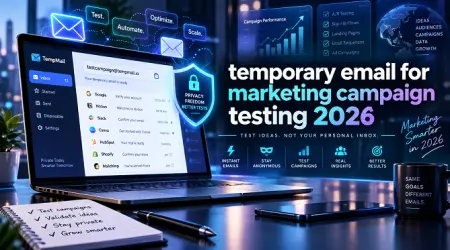
Suddenly, your pristine inbox turns into a warzone of automated follow-ups, "just checking in" messages, and aggressive daily newsletters. It’s a productivity nightmare. That is exactly why using a temporary email for digital marketing tools 2026 is no longer just a neat trick—it’s an absolute survival requirement for your daily workflow.
In my experience, marketers who don't separate their testing environment from their primary communications end up missing critical client emails simply because they are buried under a mountain of SaaS promotional garbage. You need a buffer.
This guide is going to walk you through the hidden mechanics of disposable emails, how to outsmart strict signup forms, and the exact strategies you can use to keep your digital life perfectly organized.
The Brutal Reality: Why You Need a Temp Email for Marketers in 2026
What most people don't realize is that SaaS companies have gotten incredibly aggressive with their outreach. The moment you opt-in, you are tossed into complex, multi-tiered marketing automation tools designed to track your every click.
Here is why having a temporary email address changes everything.
1. The Ultimate Sandbox for Tool Testers
As a digital marketer or freelancer, you are constantly evaluating new platforms. Email outreach tools, keyword research software, and social media schedulers all want your data before they let you see their dashboard.
Using a disposable email for digital marketing allows you to build a true "sandbox." You can trigger onboarding sequences, stress-test their email verification testing, and map out their entire sales funnel without ever polluting your actual business contacts. It allows you to study their strategy anonymously.
2. Inbox Zero Actually Becomes Possible
Every time you use a free marketing tools signup page, you are trading your attention for access. Over months and years, this builds up into a massive cognitive load.
By routing all these low-tier signups through a temporary mail service, your primary inbox remains sacred. It becomes a place strictly for paying clients, team members, and high-value communications.
3. Avoiding the Retargeting Trap
When you sign up with your real corporate email, you aren't just getting emails. Your email is often hashed and uploaded as a custom audience on major ad networks. Suddenly, you are being followed around the internet by ads for a tool you discarded after five minutes.
A fake email generator stops this cross-platform tracking dead in its tracks. You vanish like a ghost the moment the session ends.
Types of Disposable Email for Digital Marketing (And When to Use Them)
Not all temporary emails are created equal. If you are doing advanced email testing validation, you need to know the difference between the main categories.
The "Catch-All" Hack: A Digital Marketer's Secret Weapon
Let me share a quick digital hack that most average users completely overlook. Instead of relying on public temporary email address websites that frequently get blacklisted by top-tier platforms, buy a cheap, obscure domain name.
Set up a "catch-all" rule in your domain registrar's settings. Now, whenever you test a new tool, you can invent an email on the spot. Signing up for a major CRM? Use [email protected]. Trying out a new SEO crawler? Use [email protected].
If a platform later sells your data or gets breached, you will know exactly who leaked it because the spam will arrive at that specific, unique address. You can simply block that specific prefix and move on. This is incredibly powerful for maintaining control.
Pro tip: Setting up these catch-all domains and alias structures is actually a fantastic, low-friction privacy service you could easily package and offer to your own clients for a monthly retainer!
Step-by-Step: Setting Up a Temporary Email for Tool Signup
If you want to do this right, follow this specific workflow.
Step 1: Identify the Commitment Level
Are you just downloading a PDF template, or are you starting a 14-day trial of a marketing automation tool that requires you to click a confirmation link three days from now?
If it's the former, a quick 10-minute web inbox is fine. If it's the latter, you need an alias forwarder or a catch-all domain so you don't lose access mid-test.
Step 2: Generate the Address
Navigate to your chosen temporary mail service. Do not use your real name if the tool asks for one alongside the email. Use a placeholder name to maintain full anonymity.
Step 3: Bypass the Blockers
Many modern digital marketing tools 2026 have sophisticated filters. If your generic temp address is rejected, look for a premium service that rotates its domain names daily, or fall back on your custom domain hack.
Step 4: Verify and Extract
Keep the temporary inbox tab open. Once the verification email arrives, click the link or copy the code immediately.
Step 5: Burn the Bridge
If you used an alias tool and the software trial is over, go into your dashboard and toggle the alias to "inactive." Any future marketing blasts from that company will bounce immediately, saving your sanity.
See here………….Top digital marketing strategies that work
Real-World Case Study: Testing Marketing Automation Tools
After working with a mid-sized e-commerce brand last quarter, we needed to evaluate five different omnichannel marketing automation platforms.
Setting up test environments for all five meant dealing with aggressive sales teams. We knew that the moment we hit "Submit" on the contact forms, our phones would start ringing and our inboxes would be flooded with demo requests.
Here is exactly what we did:
- We created five distinct forwarding aliases using a private alias manager.
- We used these to access the free tiers and sandbox environments.
- We integrated the tracking pixels on a dummy staging site.
- We ran our traffic tests and evaluated the email deliverability of each platform.
Because we used disposable email for digital marketing, we were able to review the platforms objectively without being pressured by reps. When we finally chose the winning platform, we simply deleted the other four aliases.
The sales teams for the losing platforms never got our real contact information. We saved dozens of hours of useless back-and-forth communication.
Pros and Cons of Using a Temp Mail in 2026
Like any digital strategy, there are trade-offs. You need to weigh the benefits against the potential friction.
The Pros
- Absolute Privacy: Your personal and corporate data remains securely locked away from data brokers.
- Spam Elimination: You cut off the primary source of inbox clutter at the root.
- Security: If a SaaS tool suffers a data breach, your real credentials are not compromised.
- Unlimited Testing: Freelancers and affiliate marketers can spin up endless test environments to reverse-engineer competitor funnels.
The Cons
- Platform Pushback: High-end marketing tools are actively fighting fake email generators. You will sometimes face "Please enter a valid business email" errors.
- Loss of Access: If you use a short-lived temporary email for tool signup and forget your password later, your account is gone forever. There is no password recovery.
- Lack of Trust: Sending outbound emails from a temporary domain will almost always land in the recipient's spam folder. These tools are strictly for receiving, not sending.
See here………….Understanding the Importance of a TH9 Farming Base
5 Common Mistakes When Using a Fake Email Generator
Even experienced digital marketers mess this up. Avoid these critical errors to ensure your workflow remains smooth.
1. Using Temp Mail for Financial or Core Accounts
Never, ever use a disposable email for anything tied to your money, your domain registrar, or your primary website hosting. If the session expires and you get logged out, you will lose access to your core business assets. It is a throwaway key for a throwaway door.
2. Ignoring the "Business Email" Requirement
Many B2B digital marketing tools 2026 outright ban common public email providers, let alone known temp mail domains. Trying to force a clearly fake address through a strict B2B form is a waste of time. Upgrade to a custom catch-all domain instead.
3. Forgetting About Password Recovery
If you build an entire landing page in a free trial software, log out, and realize you used a 10-minute email that has now evaporated... you cannot reset your password. Always use persistent forwarding aliases for anything you might need to log back into tomorrow.
4. Overlooking Browser Extensions
Most people manually visit a temporary email website every time they need an address. This is incredibly inefficient. The best modern temp email for marketers comes with browser extensions. With two clicks, you can generate and paste a secure, unique address directly into the signup field.
5. Testing Email Deliverability with Public Inboxes
If you are doing email verification testing for your own outbound campaigns, sending test emails to public disposable inboxes will skew your analytics. Many internet service providers flag domains that send too much mail to known spam-trap domains. Use dedicated inbox placement testing tools for this, not random fake emails.
FAQs About Temporary Email Addresses
Is it legal to use a temporary email address?
Yes, using a temporary email is completely legal. It is a legitimate privacy tool used to protect personal data and manage inbox hygiene. However, using it to bypass paid paywalls maliciously violates platform terms of service.
Can SaaS companies detect temporary emails?
Yes. Many platforms use active API blacklists that check the domain of the email address during signup. If the domain is associated with a known fake email generator, the form will reject it.
Will temporary emails protect me from malware?
They protect you from phishing attempts and malicious links entering your primary inbox. If a temp mail receives a sketchy attachment, you can simply close the browser window, and the threat disappears entirely.
Can I send emails from a disposable address?
Some services allow it, but it is highly discouraged. Because spammers often abuse these domains, any email you send from a public temp mail service will almost certainly be blocked or filtered into the recipient's spam folder.
What is the difference between an alias and a disposable email?
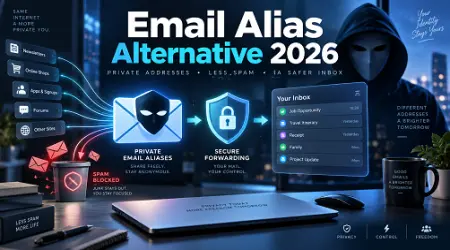
A disposable email is a completely separate, temporary inbox that deletes itself after a short time. An alias is a unique forwarding address that reroutes mail to your real inbox. An alias can be kept forever or turned off at your discretion.
How do I bypass "business email only" blocks?
The most reliable method is purchasing a cheap, obscure top-level domain and setting up an email forwarding rule. It will pass almost all standard business email validation checks because it is technically a legitimate, private domain.
Conclusion: Your Action Plan for 2026
Relying on your primary email address for every free marketing tools signup is a rookie mistake that will cost you hours of productivity and compromise your digital privacy.
As the landscape of digital marketing tools 2026 continues to evolve, the sheer volume of automated follow-ups, tracking pixels, and data brokering is only going to increase. You must build a defensive wall around your attention.
Here is your immediate action plan:
- Stop giving out your real address to platforms you haven't fully vetted.
- Bookmark a reliable, high-speed temporary mail service for quick, one-off downloads.
- Invest in an alias forwarding service or set up a cheap catch-all domain for long-term software trials.
- Audit your current inbox and start aggressively unsubscribing from tools you tested months ago.
Take control of your testing environment. By utilizing a smart disposable email strategy, you can explore the newest software, analyze competitor funnels, and protect your workflow.
Start implementing these digital hacks today, and watch your daily productivity skyrocket. What tool are you going to test first?