The Ultimate Guide to Using a Temporary Email for Digital Tools Testing 2026
If you work in tech, marketing, or development, you already know the sinking feeling. You find a shiny new SaaS product, an analytics dashboard, or a promising automation platform. You want to take it for a spin. But right there, blocking your path, is the mandatory signup wall: “Enter your work email to start your 14-day free trial.”
You know exactly what happens next. The moment you hand over your real address, your inbox is absolutely bombarded. Welcome emails, onboarding sequences, "just checking in" messages from aggressive sales reps, and endless newsletters. It’s a nightmare.
In my experience, safeguarding your primary inbox isn’t just about avoiding annoyance; it’s about protecting your productivity and digital security. That is exactly why mastering the use of a temporary email for digital tools testing 2026 is no longer optional—it is an essential survival skill for the modern web.
Whether you are a developer running QA tests on a new registration flow, a marketer reverse-engineering a competitor’s funnel, or just a privacy-conscious user looking to keep your data safe, this guide will walk you through exactly how to leverage disposable inboxes like a pro.
Why You Need a Temporary Email for Digital Tools Testing 2026
We are way past the days when you could just append a "+test" to your Gmail address and call it a day. Today’s marketing platforms and CRM systems are smart. They recognize the "plus trick" and often link those aliases right back to your primary profile, tracking your behavior anyway.
What most people don’t realize is that true digital anonymity requires a dedicated disposable email service. Here is why you need to incorporate this into your workflow immediately.
1. The Death of the "Clean" Test Environment
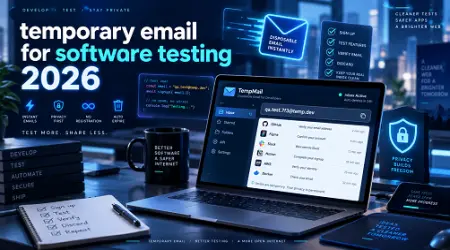
If you are a software developer or a QA tester, you rely on clean environments. When you are building a new app, you have to test the user registration, email verification, password resets, and transactional emails.
If you use your own email, or even a static secondary email, the test data gets muddy. A throwaway email gives you a completely blank slate every single time. You can generate an instant temp mail, run your email verification testing, and burn the address when you are done. No residual data, no cross-contamination.
2. Spying on Competitor Funnels (Without Getting Caught)
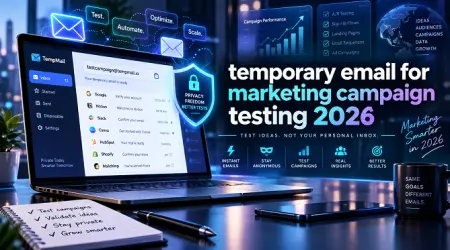
As a digital marketer, reverse-engineering your competitors is part of the job. You want to see what their onboarding drip campaign looks like. You want to analyze their lead magnets and webinar follow-ups.
If you sign up with your company email, they know exactly who you are and what you are doing. Using an anonymous email allows you to map out their entire customer journey completely under the radar.
3. Avoiding the SaaS Sales Trap
When you sign up for a digital tool using a fake email address or a secure temporary email, you effectively build a moat around your time. You can evaluate the software on your own terms. If the tool is terrible, you just walk away. The disposable inbox self-destructs, and the sales team can't cold-call your office or spam your LinkedIn because they don't have your real details.
See here……….How to use Instagram for growth
Top Hidden Features of a Temporary Email Generator Most Users Miss
When most people hear "temp mail," they picture a sketchy, ad-riddled website from 2012 that barely works. But the landscape has evolved drastically. A modern temp email generator 2026 packs serious firepower. Here are the hidden features you should be utilizing.
API Integration for Seamless Automation
After working with dozens of development teams, the most common mistake I see is manual testing. Developers will literally open a browser tab, copy a one-time email address, paste it into their app, and wait for the verification link.
Modern email testing tools offer robust API access. You can plug the temporary email generator directly into your Cypress, Selenium, or Playwright testing scripts. Your automated script can request a new QA testing email, trigger the signup in your app, fetch the inbox via API, parse the verification link, and click it—all in milliseconds.
Custom Domains for B2B Testing
Many high-end SaaS platforms now block standard free temporary email domains (like @mailinator.com or @10minutemail.com). To get around this, premium disposable inbox providers let you route a custom domain through their temporary routing system.
This means you can buy a cheap, generic domain (e.g., globaltech-testing.net), plug it into a disposable email service, and bypass even the strictest enterprise firewalls. The SaaS tool thinks it’s a legitimate corporate signup, while you enjoy the benefits of a self-destructing inbox.
Attachment Capabilities and HTML Rendering
Old temp mail for testing used to only render plain text. Today, you need to know exactly how your HTML-heavy newsletters look across different clients. The best tools now render complex HTML, CSS, and even allow for secure attachment downloads, which is vital if you are testing invoice generation or digital product delivery.
How to Choose the Best Disposable Email Service
Not all tools are created equal. When building out your developer testing email stack, you need to evaluate providers based on a few strict criteria.
Lifespan and Persistence
How long do you need the inbox to live?
- Instant Temp Mail: Good for 10 to 60 minutes. Perfect for quick email verification testing.
- Extended Temporary Inbox: Some services allow you to keep an address alive for up to a week. This is essential if you are testing a multi-day onboarding sequence or a delayed-abandonment-cart flow.
Privacy and Security
Is the secure temporary email truly secure? Some public temp mail sites use shared inboxes. This means if someone else guesses the email address you generated, they can see your mail. If you are testing sensitive internal tools or dealing with proprietary company data, you must use a provider that offers private, isolated inboxes.
Step-by-Step: Setting Up Your Disposable Inbox Workflow
Want to optimize your digital tool testing? Here is a practical, step-by-step workflow you can implement today.
Step 1: Define the Test Scope
Determine what you are testing. Is it a quick software trial, or a 7-day email course? This dictates whether you need a 10-minute throwaway email or a persistent temporary inbox.
Step 2: Generate the Address
Use a reputable temporary email generator. If you are testing a B2B tool, try to use a generator that offers premium or less-common domain extensions to avoid getting blocked by anti-spam filters.
Step 3: Execute the Signup
Copy the address and paste it into the digital tool's registration field. Use a password manager to generate a strong password, even for this temporary account.
Step 4: Monitor and Capture
Wait for the inbound email. If you are a QA tester, verify that the email didn't hit the spam filter (many temp services provide spam score headers). Check the HTML rendering and test the links.
Step 5: Document and Destroy
Extract any necessary data (like an API key or a software license provided in the welcome email). Once you have what you need, close the session. The disposable email service will wipe the inbox, leaving no digital footprint.
Real-World Case Study: Saving 10 Hours a Week on QA Testing
Let me share a quick story that highlights the practical power of this workflow.
I was recently consulting for a mid-sized digital marketing agency. Their QA team was spending roughly 10 hours a week manually testing client email funnels. Every time they built a new campaign in HubSpot or ActiveCampaign, a tester had to create a new Gmail account, sign up through the client's landing page, wait for the emails, and screenshot them for approval. It was a massive bottleneck.
We completely overhauled their system using an advanced temporary email for digital tools testing 2026.
By integrating a temp mail API directly into their Slack workspace, any team member could type a slash command (e.g., /tempmail) to instantly generate a clean address. They ran the test, and the API pushed the incoming HTML emails directly into a dedicated Slack channel for the whole team to review.
Not only did this eliminate the tedious manual account creation, but it completely streamlined their approval process.
A Quick Tip on Monetizing Your Testing Workflows
If you run an agency, offer freelance services, or are a consultant, optimizing this process isn't just a time-saver—it's a revenue generator.
You can easily package "Email Deliverability and Onboarding Audits" as a standalone service. By utilizing bulk fake email addresses and automation, you can stress-test a client's entire CRM setup in minutes, package the results into a high-value PDF report, and charge a premium. Furthermore, if you recommend enterprise-grade email testing tools to your clients, you can often secure subtle affiliate commissions or lead generation kickbacks, adding a nice recurring revenue stream to your bottom line without ever sounding salesy.
See here……….TH13 Best CWL Base: Unbeatable Layouts for Clan War Leagues
Pros and Cons of Using a Throwaway Email
To give you a balanced perspective, let’s look at the advantages and the limitations of using temporary inboxes.
Common Mistakes When Using Temp Mail for Testing
Even seasoned developers make formatting and strategic errors when dealing with disposable inboxes. Avoid these critical traps:
1. Using Temp Mail for Permanent Accounts
This is the most dangerous mistake. Never use a temporary email for a digital tool you actually intend to keep using. If the software logs you out and requires an email code to verify your identity, you will be permanently locked out because the temporary inbox no longer exists.
2. Ignoring Deliverability Headers
If you are using an email testing tool to check your own app's outgoing mail, don't just look at whether the email arrived. Look at the headers. Many testers ignore the SPF, DKIM, and DMARC results that premium temporary inboxes provide. If your app is sending mail that barely passes these checks, your real users will see your emails go to spam.
3. Forgetting About Data Privacy
If your test email includes sensitive PII (Personally Identifiable Information) or confidential company metrics, do not send it to a free, public disposable email generator. Always use a secure, private instance or a paid tier to ensure your test data isn't exposed to the public web.
Frequently Asked Questions (FAQs)
What is the best temporary email for digital tools testing 2026?
The "best" tool depends on your needs. For quick, one-off signups, free services like Temp-Mail or Guerrilla Mail work great. For developer QA testing and API integration, tools like Mailtrap or MailSlurp are the industry standards for 2026.
Can websites detect a fake email address?
Yes. Many platforms maintain blocklists of known disposable email domains. If you try to sign up and get rejected, you may need to use a premium service that offers unique, rotating domain names.
Is it legal to use a disposable email service?
Absolutely. There are no laws against using an anonymous email to protect your privacy online. However, it violates the Terms of Service of certain platforms, which may result in your test account being banned.
How long does a temporary inbox last?
It varies by provider. Some self-destruct after 10 minutes, others last until you close your browser window, and some premium services allow you to keep an inbox active for up to a month.
Can I reply to emails using a throwaway email?
Most free services are "receive-only" to prevent spammers from using their servers for malicious outbound campaigns. However, a few premium developer testing email tools do allow secure, rate-limited outbound replies for full-circle QA testing.
How do I test my own app's email deliverability?
Instead of using your personal Gmail, route your application's outbound emails through an email verification testing service. These tools will catch the outgoing mail, score it for spam likelihood, check the HTML rendering across different devices, and ensure your links work—all without ever sending a real email to the public internet.
Conclusion: Take Back Control of Your Inbox
We live in an era where data is the most valuable currency, and every digital tool wants a piece of your personal information just to let you peek behind the curtain. Using a temporary email for digital tools testing 2026 is the smartest, most efficient way to evaluate software, test your own development projects, and maintain absolute privacy.
By implementing the strategies, hidden features, and API automations discussed above, you will not only save hours of frustrating manual work, but you will also ensure that your primary inbox remains exactly what it was meant to be: a place for meaningful communication, not a dumping ground for SaaS spam.
What is the one SaaS tool that spammed you so badly it forced you to start looking into temporary emails? Drop a comment or share your experience below—I’d love to hear how you are optimizing your testing workflow this year!