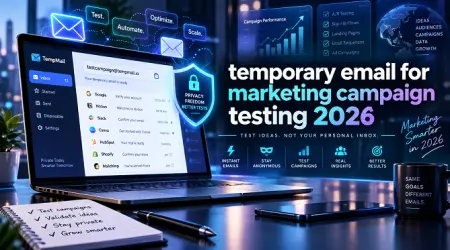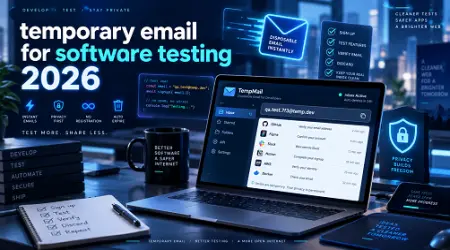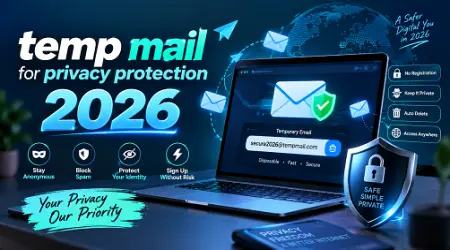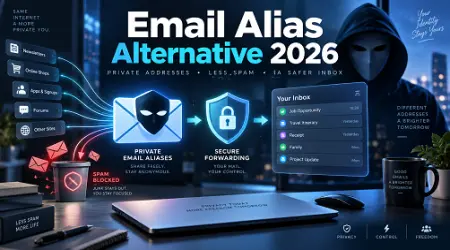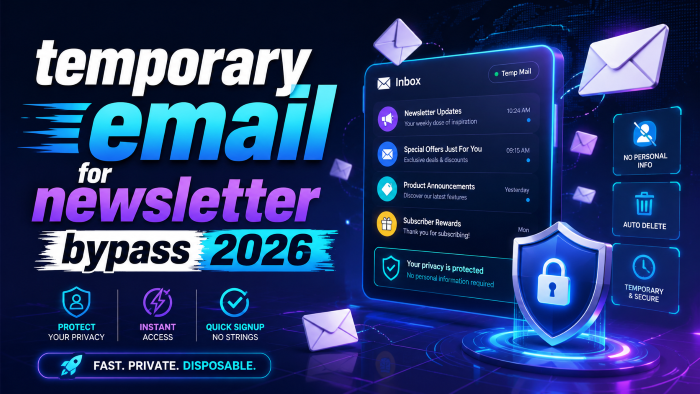
Stop Giving Away Your Data: The Ultimate Guide to a Temporary Email for Newsletter Bypass 2026
We've all been there. You stumble across a website offering a massive 20% discount code, a must-read free eBook, or an exclusive digital template. The catch? You just have to hand over your email address.
You type it in, get your freebie, and feel pretty good about the transaction. But fast forward a week, and your inbox is completely unrecognizable. You're bombarded with daily "urgent" offers, weekly roundups you never asked for, and somehow, promotional spam from three other companies you've never even heard of.
If you are tired of playing defense with your personal inbox, you need a new strategy. Finding a reliable temporary email for newsletter bypass 2026 is no longer just a neat tech trick; it is an absolute necessity for anyone who wants to protect their digital privacy and keep their sanity intact.
In my experience working with digital privacy tools and helping everyday users take back control of their online footprint, I've seen how aggressively modern marketing funnels operate. They don't just want to send you an email; they want to track your open rates, monitor the links you click, and sell your profile to data brokers.
Today, we are going to dive deep into exactly how you can use a disposable email address to get the perks you want without the spam you hate.
Why You Need a Temporary Email for Newsletter Bypass in 2026
What most people don’t realize is that your email address is effectively your digital passport. It ties together your social media profiles, your banking information, your shopping habits, and your personal communications.
When you hand over your primary email for a quick newsletter signup, you are giving that company a skeleton key to your digital identity.
The Privacy Threat of the Modern Inbox
By 2026, marketing technology has evolved to a point where simply opening an email can trigger a cascade of data collection. Invisible tracking pixels embedded in marketing emails report back to servers, logging your IP address, your location, and the exact device you are using.
If you use an anonymous email signup, you sever that tracking link completely. A fake email for newsletter signup acts as a protective firewall. The marketing software fires its tracking pixels into a void, keeping your actual location and identity totally secure.
Keeping Your Main Inbox Clutter-Free
Think about your daily workflow. Every time you have to pause to delete a promotional email, you lose focus. A temporary inbox solves this entirely. It separates the "noise" from the "signal." Your personal email remains reserved for family, friends, work, and essential services, while your burner email handles the endless stream of automated marketing trash.
How Does a Disposable Email Address Work?
If you are new to the world of email privacy tools, the concept of a disposable inbox might sound highly technical. It really isn't.
Behind the Scenes of a Burner Email
A free temp mail service provides you with a randomly generated email address hosted on their servers.
Here is what happens under the hood:
- Instant Creation: The moment you load the website or app, a unique one-time email address is generated for you. No passwords, no registration, no personal details required.
- Short-Term Hosting: The service hosts a temporary inbox that captures any incoming mail sent to that specific address.
- Auto-Destruction: Depending on the service you use, the email address and all its contents are permanently wiped from the servers after a set period—usually ranging from 10 minutes to 24 hours.
It is the digital equivalent of a prepaid burner phone. You use it for the specific task at hand, and then you throw it away.
Top 5 Best Temporary Email Services in 2026
After testing dozens of tools to avoid newsletter spam, I’ve narrowed down the field. Not all services are created equal—some are blocked by major websites, while others are bogged down with intrusive ads.
Here is a breakdown of the most reliable options available right now.
Insider Tip: While standard free temp mail sites are great for quick bypasses, if you are serious about curating your inbox long-term, investing a few dollars a month in a premium alias service like SimpleLogin or adding a privacy-focused VPN bundle is highly recommended. Not only do they offer bulletproof privacy, but many offer referral programs where you can earn credits for bringing friends on board.
Step-by-Step: Newsletter Signup Without Real Email
Let’s put this into practice. Imagine you want to download a comprehensive guide on home organizing, but the site demands an email address. Here is exactly how to execute a private email signup.
- Open Your Temp Mail Tool: Before you click "download" on the target website, open a new browser tab and navigate to a service like Temp-Mail.org or 10MinuteMail.
- Copy the Generated Address: As soon as the page loads, you will see a strange-looking email address (e.g., [email protected]). Click the copy button.
- Submit the Burner Email: Go back to the website offering the freebie. Paste the disposable email address into the signup form and hit submit.
- Wait for the Payload: Switch back to your temp mail tab. Within a few seconds to a minute, you will see the confirmation or delivery email pop up in the temporary inbox.
- Extract the Value: Open the email, click the confirmation link, or download your file.
- Abandon Ship: Close the temp mail tab. The address will self-destruct, and you will never hear from that aggressive marketing funnel again.
See here…………How to learn English fast for beginners
Real-World Case Study: Escaping the Marketing Funnel
To really illustrate the value of this, let’s look at a common scenario.
I recently needed to research a software tool for a project. To view their pricing tier, the company forced me behind an email gate. I used a burner email for signups.
Over the next 14 days, that single temporary inbox received:
- 3 "Welcome" sequence emails.
- 5 "Did you forget something?" follow-ups.
- 4 "Limited time discount" offers.
- 2 invitations to unrelated webinars.
That is 14 pieces of mail from a single interaction. Now multiply that by the dozens of times a month we are asked to provide our email online. It is no wonder our primary inboxes are a mess. By using a fake email for newsletter signup, I extracted the pricing information I needed and let the 14 spam emails disappear into the digital ether.
The Two Types of Email Shields: Burners vs. Aliases
If you want to master email privacy tools, you need to understand the difference between a temporary burner and an email alias.
The Burner Email
This is your standard free temp mail. It lives for 10 minutes and dies. It is perfect for a company you never want to interact with again.
The Email Alias
What if you do want to read the newsletter, but you just don't want them to have your real data? This is where an alias service comes in. Tools like Apple’s "Hide My Email" or DuckDuckGo Email Protection generate a unique, forwarding email address for that specific website.
The emails forward to your real inbox, so you can read the newsletter. But, if that company ever sells your data, or if you get tired of their content, you simply toggle a switch in your settings, and the alias is deleted forever. They can never contact you again.
Pros and Cons of Using a Temporary Inbox
While temp mail for newsletters is incredibly powerful, it isn't a magic bullet for every single situation. Let's look at the reality of using these tools daily.
The Pros
- Zero Spam: The most obvious benefit. Your real inbox stays pristine.
- Enhanced Security: If the website you signed up for gets hacked, your real email address and password aren't leaked in the data breach.
- Speed: Generating a disposable inbox takes literally one second. It is entirely frictionless.
- Total Anonymity: No connection to your name, location, or IP address (especially if paired with a good VPN).
The Cons
- Account Recovery Issues: If you use a 10-minute mail to create an account, and you forget your password a month later, you are locked out permanently.
- Blocked Domains: Some highly sophisticated websites maintain blocklists of known temporary email domains and will reject them at the signup form.
- No Long-Term Storage: You cannot save the emails or refer back to them later.
Common Mistakes When Using a Fake Email for Newsletter Signup
Even privacy-conscious users trip up sometimes. Avoid these common pitfalls to ensure your digital life runs smoothly.
Mistake 1: Using Temp Mail for Important Accounts
Never, ever use a temporary email for anything involving money, health, or permanent access. If you are signing up for a bank account, a crypto exchange, a software subscription you are paying for, or a government portal, use your real email. If you need privacy for these, use a permanent alias, not a burner.
Mistake 2: Closing the Tab Too Early
Many websites use a double opt-in system. You enter the email, and they send a confirmation link you must click before they release the digital product. If you close your temp mail tab before clicking that link, you lose access to that inbox and have to start over.
Mistake 3: Relying on Just One Provider
Because marketers are constantly updating their blocklists, a domain that works today might get blocked tomorrow. Keep two or three different temp mail services bookmarked so you can easily pivot if one gets rejected by a stubborn signup form.
See here…………Best TH12 Farming Base Layouts in Clash of Clans (Ultimate Guide 2025)
Frequently Asked Questions (FAQs)
Is it legal to use a temporary email address?
Yes, absolutely. There are no laws against using a disposable email address to protect your privacy online. It is simply a tool to manage inbound communications.
Can temporary emails be traced back to me?
Generally, no. The best temporary email 2026 services do not require you to register, meaning there is no personal data tying you to the inbox. For ultimate security, accessing the temp mail site via a VPN ensures even your IP address is hidden.
Why do websites block disposable email addresses?
Companies spend money to send emails and maintain their marketing databases. They want high-quality leads—people who might actually buy their products. Fake emails skew their data and cost them money, so they use software to detect and block known temp domains.
What should I do if a website blocks my temp mail?
If a site rejects your burner email for signups, try refreshing the temp mail site to generate a different domain name. If that fails, switch to an entirely different provider. Often, smaller or newer temp mail services haven't been added to corporate blocklists yet.
Is Apple’s "Hide My Email" a temporary email?
Not exactly. It is an alias service. It generates unique, random addresses that forward to your iCloud inbox. It is excellent for ongoing privacy, but unlike a true temp mail, the emails do reach your actual devices until you manually turn the alias off.
Can I send emails from a temporary inbox?
Some services, like Guerrilla Mail, do allow you to send outbound emails. However, be aware that emails sent from these domains almost always end up in the recipient's spam folder, as email providers heavily filter them.
Final Thoughts: Take Back Your Inbox
Your attention is a highly valuable commodity, and you shouldn't give it away for the price of a generic PDF or a 5% discount code. As we navigate the heavily commercialized web of 2026, protecting your digital borders is largely up to you.
Using a temporary email for newsletter bypass 2026 is one of the easiest, fastest, and most effective ways to maintain your digital hygiene. It allows you to freely explore the internet, grab the resources you need, and test out new software without paying the hidden tax of endless promotional spam.
Start keeping a temp mail tab pinned in your browser. Make it a habit to route the junk through a disposable inbox, and save your real email address for the people and services that actually matter. Your future self—staring at a clean, quiet inbox—will thank you.