The Ultimate Guide to the Temporary Email Inbox 2026: Stop Spam and Protect Your Identity
Let’s be honest: looking at your primary email inbox these days can feel like walking into a hoarding situation. You’ve got newsletters you don’t remember signing up for, "urgent" offers from a store you visited once five years ago, and verification codes buried under a mountain of junk.
If you value your digital privacy—or just your sanity—you’ve probably realized that handing out your real email address to every website that asks for it is a bad idea.
This is where the concept of a temporary email inbox 2026 comes into play. It isn’t just a hacker tool or something for tech wizards anymore. In 2026, using a disposable email address is standard digital hygiene, just like using a VPN or a password manager.
I’ve spent the last decade working in digital content and SEO, and I’ve seen the evolution of spam first-hand. It’s gotten smarter, more aggressive, and harder to unsubscribe from. In this guide, I’m going to walk you through exactly how to use a temp mail inbox effectively, why the technology has shifted in 2026, and how to spot a secure temporary email service that won’t let you down.
What Actually Is a Temporary Email Inbox?
If you are new to this, think of a temporary email inbox as a "burner phone" for the internet.
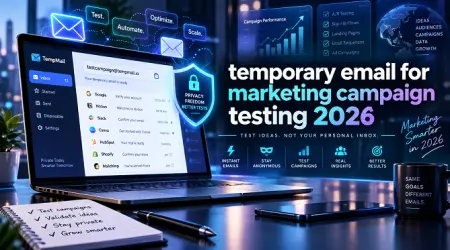
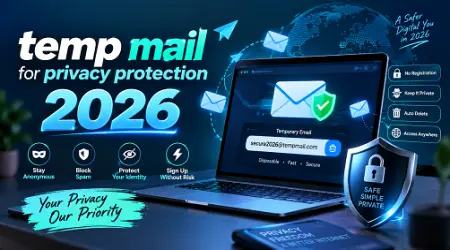
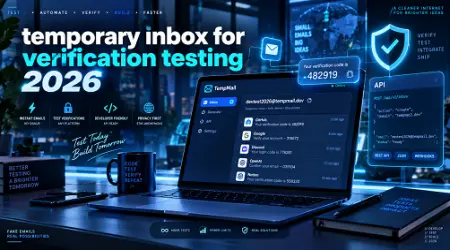
When you sign up for a temporary email inbox 2026, the service gives you a random, functional email address (like [email protected]). You can copy this address, paste it into a website’s registration form, and receive the verification link right in your browser.
The magic happens afterward: the email address self-destructs. Depending on the service, it might last for 10 minutes, an hour, or until you close the tab. Once it’s gone, it’s gone forever. Any spam sent to that address bounces, and your real inbox stays pristine.
The Evolution: Why "2026" Matters
You might be wondering, "Hasn't this existed for years?" Yes, but the landscape has changed dramatically.
Back in 2018 or 2020, most websites didn't care if you used a fake email generator. You could use the oldest, clunkiest tools, and they would work.
In my experience, 2026 is different. Websites have become incredibly sophisticated at detecting disposable domains. Major retailers, streaming services, and even news sites maintain "blocklists" of known temp mail domains. If you try to use a low-quality service today, you’ll likely see an error message saying, "Please use a valid email address."
The best temp mail 2026 services have adapted. They now use:
- Premium Domains: They use domains that look "real" to avoid detection filters.
- Encryption: They ensure that the emails you receive (which might contain sensitive login links) aren't interceptable by others.
- Better UI: The days of ugly, text-only interfaces are gone. Modern tools look and feel like a simplified Gmail or Outlook.
Why You Need a Disposable Email Address Right Now
It’s not just about avoiding a few marketing emails. The use cases for an anonymous email inbox are surprisingly broad.
1. The "Gated Content" Trap We’ve all seen it. You want to download a PDF report, access a specific article, or get a discount code, but the site demands your email address first. You know the moment you hit "Submit," your data is going to be sold or added to a dozen marketing funnels. A one-time email address solves this instantly. You get the content; they get a dead email.
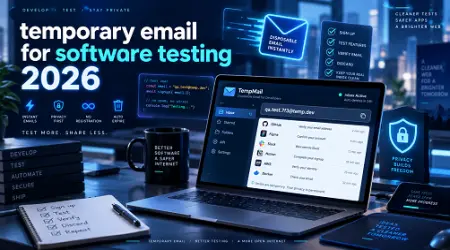
2. Testing Apps and Software As a strategist, I often have to test new tools or software interfaces. Signing up for a new account every time I want to test a user flow is tedious. A temp mail inbox allows me to create fresh accounts in seconds without clogging up my work email.
3. Online Shopping and Loyalty Programs Have you ever wanted the "20% off your first order" coupon but didn't want the daily newsletters that follow? Use a temp mail for the code, grab the discount, and checkout. Note: I usually recommend using your real email for the actual receipt if it's a high-value item (more on that later), but for the sign-up bonus? Go temporary.
4. Privacy and Anonymity Sometimes, you just want to browse or comment on a forum without linking your identity to your activity. A secure temporary email acts as a buffer between your digital footprint and your real identity.
How to Choose the Best Temp Mail 2026
Not all generators are created equal. If you Google "free temporary email," you will find millions of results. How do you know which one to trust?
Here is the criteria I use when evaluating these tools:
Domain Reputation (The most important factor) Does the service refresh its domain names often? If a service has been using the same @trashmail.com domain for five years, every website on earth has blocked it. The best services rotate their domains daily or weekly.
Security and Encryption Does the site use HTTPS? Do they automatically delete your emails after a set period? You don't want a verification code for a crypto exchange sitting on a public server where anyone could stumble upon it.
Ease of Use Does the inbox refresh automatically? Do you have to click a button to see new messages? The best tools push the email to your screen instantly.
Attachment Support Sometimes you need to receive a file. Many basic fake email generator tools strip out attachments. The superior ones allow you to download files safely.
Step-by-Step: How to Use a Temporary Email Inbox
If you’ve never done this before, don’t worry. It is incredibly simple. Here is a walkthrough of how I typically use these tools.
Step 1: Open the Temp Mail Service Navigate to your chosen temporary email inbox 2026 provider. You usually don’t need to download an app; the browser version works best.
Step 2: Copy the Address As soon as the page loads, you will see an email address prominently displayed. There is usually a "Copy to Clipboard" button next to it. Click that.
Step 3: Paste into the Registration Form Go to the website you are trying to access. Paste the copied address into the email field. Create a password (I recommend using a password manager or a random string, since you won’t be keeping this account).
Step 4: Wait for the Ping Go back to the temp mail tab. Keep it open. Within seconds, you should see the incoming email appear.
Step 5: Verify and Vanish Open the email, click the verification link, and complete your task. Once you have what you need, simply close the temp mail tab. The address will expire, and the data will be wiped.
See here….Top digital marketing strategies that work
Common Mistakes: When NOT to Use Temp Mail
This is the section most people skip, but it is the most critical part of this article. I cannot stress this enough: Temporary emails are for temporary situations.
Here is where I see people get into trouble:
- Banking and Finance: Never, ever use a disposable address for your bank, PayPal, or crypto wallet. If you forget your password or trigger a security check, the bank will send a code to that email. Since that email no longer exists, you are locked out of your money. Permanently.
- Medical or Legal Documents: Do not trust a public, temporary inbox with sensitive health data or legal contracts. These platforms are not designed for high-level security storage.
- Subscriptions You Want to Keep: If you plan on keeping a Netflix or Spotify account for years, use a real email (or an email alias). If the service detects a temp mail later on, they might ban the account, and you’ll lose your watch history and playlists.
- Online Recoveries: Don't use a temp mail as a "recovery email" for your main Google or Apple account. It creates a loop where you can’t verify your identity.
The "Email Alias" Alternative
In 2026, the line between a temporary email inbox and an "email alias" is blurring.
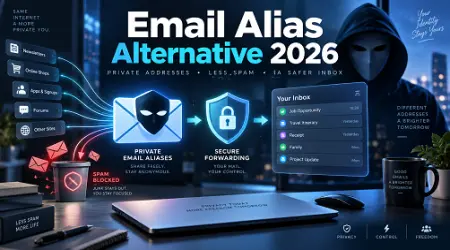
Tech giants like Apple (with "Hide My Email") and specialized privacy services allow you to create "mask" emails. These forward to your real inbox but can be turned off at any time.
What’s the difference?
- Temp Mail Inbox: You view the emails on a website; the address dies quickly. Best for "one-and-done" interactions.
- Email Alias: The emails come to your real inbox; the address lasts until you delete it. Best for ongoing subscriptions where you still want privacy.
If you are just downloading a whitepaper, use a temp mail. If you are signing up for a monthly newsletter you might want to read occasionally, use an alias.
Pros and Cons of Disposable Email Addresses
To give you a balanced view, let’s break down the advantages and disadvantages.
Pros:
- Stops Spam Cold: Keeps your primary inbox clean.
- Enhances Anonymity: Protects your identity from data breaches.
- Free and Fast: Most services cost nothing and require no registration.
- No Commitment: You can walk away from the account instantly.
Cons:
- Not Permanent: Once you close the tab, that address is usually gone forever.
- Blocked by Some Sites: You may need to try a few different services to find one that works on stricter websites.
- Security Risks (if misused): Using them for important accounts can lead to loss of access.
FAQ: Your Questions Answered
Q: Is using a temporary email inbox legal? A: Absolutely. Using a disposable email address is perfectly legal. You are simply choosing a different method to receive communication. However, using them to commit fraud or abuse trial periods violates terms of service, which is a different issue.
Q: Can I send emails from a temp mail inbox? A: Generally, no. Most temporary email for verification tools are "receive-only" to prevent spammers from using them to send junk mail. Some premium services allow sending, but for the average user, it’s an inbox only.
Q: How long does the email address last? A: It varies. Some last 10 minutes (often called "10-minute mail"), others last 24 hours. Some stick around as long as you keep the browser tab open.
Q: Can I recover a temporary email once I close the browser? A: In 99% of cases, no. That is the point of the service. Some tools offer a "recover key" for a short window, but I wouldn't rely on it. If you think you might need the email again tomorrow, don't use a temp mail.
Q: Are these services truly anonymous? A: They provide a high level of anonymity regarding your email identity. However, the website you are visiting can still track your IP address, browser fingerprint, and cookies. If you need total anonymity, pair a best temp mail 2026 service with a VPN.
See here…Understanding the Importance of a TH9 Farming Base
Conclusion
The internet in 2026 is a noisy, data-hungry place. Every click, scroll, and sign-up is tracked. A temporary email inbox 2026 is one of the few tools that puts a little bit of power back in your hands.
It allows you to explore the web, access information, and test services without paying the "data tax" of handing over your personal contact details.
My advice? Bookmark a reliable temp mail inbox today. The next time a website demands your email address just to show you a generic 10% coupon or a blog post, don't hesitate. Use the temp mail. Your future self—and your clutter-free real inbox—will thank you.
Start treating your primary email address like your social security number: give it out rarely, and only to those you trust. For everything else? Keep it temporary.