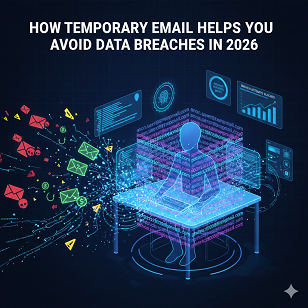
How Temporary Email Helps You Avoid Data Breaches in 2026
You just downloaded a slick new budgeting app that promises to “never sell your data.”
Two weeks later your inbox is drowning in crypto scams, fake invoices, and “urgent” password-reset requests you never asked for.
Sound familiar?
That sinking feeling is the first sign your real email address has leaked—again.
In 2026, when a single breach can expose 50 million records in the blink of an eye, the smartest move is to never hand over your permanent address in the first place.
Enter the humble temporary email: a free, 30-second shield that keeps your identity, your inbox, and your sanity safe.
Below, we’ll walk through exactly how temporary email helps you avoid data breaches in 2026, why big-name security pros quietly swear by it, and the dead-simple tricks to make throwaway addresses work for you—not against you.
What Is a Temporary Email (and Why Everyone’s Using It in 2026)
Think of a temporary email like a burner phone number, but for your inbox.
You visit a site like Temp-Mail, 10MinuteMail, or Guerrilla Mail, copy the auto-generated address, paste it into whatever sketchy form is asking for it, and forget about it.
The inbox self-destructs in anywhere from 10 minutes to 30 days, depending on the provider.
No passwords to remember, no personal info required, and—here’s the kicker—zero ties back to your real identity.
Quick jargon check
- Temp mail, burner email, disposable email, throwaway email—all the same thing.
- Alias forwarding (Apple’s Hide My Email, Firefox Relay, SimpleLogin) is slightly different: those forward to your real inbox but still mask your address. We’ll touch on both styles.
The 2026 Breach Landscape: Why Your Real Email Is a Hacker’s Golden Key
Last year alone, 3.4 billion records were leaked across 2,700 publicly disclosed breaches.
The biggest spill? A single marketing firm lost 1.6 billion email addresses tied to names, location data, and purchase histories.
Once crooks have your email they can:
- Reset passwords on any account that shares it
- Launch spear-phishing attacks that look scarily personal
- Stuff leaked credentials into automated “credential-stuffing” bots
- Sell the address on dark-web “combo lists” for pennies
In short, your email is the master key to your digital life.
Handing it out like candy is the fastest way to get robbed—especially when AI-generated phishing emails now sound more human than your coworkers.
How Temporary Email Blocks the Data-Breach Domino Effect
1. No Real Address, No Leak
When the shopping site you used once gets breached, the only thing exposed is a random string like [email protected].
That address is already expired, so it’s useless to hackers.
Your real inbox stays off every future paste dump.
2. Spam Dies on the Vine
Even if the site doesn’t get hacked but does sell your data (shocker), all promo emails bounce or land in a dead inbox that auto-deletes.
Your primary inbox stays clean, which means fewer chances to click a malicious link.
3. Cross-Site Tracking Collapses
Marketers track you by hashing your email address into an ID that follows you around the web.
Use a unique burner every time and those profiles shatter into unconnected fragments.
Good luck building a “universal user graph” out of that.
4. Phishing Gets Dumber
Criminals scrape breached databases, then craft emails that reference your real name, location, or recent purchases.
If the only thing they have is a disposable address, their spear-phishing turns into sad, generic bait that’s easy to spot.
Real-Life Scenarios: Where Temp Mail Saves You in 2026
Signing Up for a Free Wi-Fi Hotspot
Airport gateways love to demand your email before they’ll unlock the internet.
Use a burner, get online, and the “exclusive travel deals” that follow never haunt your real inbox—even when that hotspot vendor inevitably leaks 20 million addresses.
Downloading a White Paper or E-book
B2B marketers gate juicy PDFs behind email forms. Fair trade, but 48 hours later you’re subscribed to eight nurture sequences.
Paste a temp address, grab the PDF, and move on. If the content’s truly valuable, subscribe later with your real address—after you vet the company.
Entering a Contest or Giveaway
“Win the new VR headset! Just enter your email!”
In 2026, giveaways are data-harvesting machines.
Use a disposable address and you still get the entry confirmation; you just won’t receive daily “you didn’t win, but here’s 10 % off” emails for life.
Testing Your Own App or Newsletter
Developers need dozens of fresh addresses to test sign-up flows.
Temp mail gives you unlimited test inboxes without polluting your own domain or paying for extra seats in Google Workspace.
Step-by-Step: Using Temporary Email the Smart Way
- Pick a reputable provider
- 10MinuteMail (auto-refreshes time if you need longer)
- Temp-Mail.org (mobile app + browser extension)
- Guerrilla Mail (choose your own username)
- Mail.tm (API for developers)
- Copy the random address
No registration needed—just hit the clipboard icon. - Paste into the form
If the site blocks “temp mail domains,” try alias forwarding (see below). - Click the confirmation link
The inbox appears right on the provider’s homepage. Most messages arrive within 10 seconds. - Let it die
Once you’re done, close the tab. The address expires and bounces future mail, shielding you from any downstream breach.
Alias Forwarding: The “Premium Cousin” of Burner Emails
Sometimes you do want replies—say, support tickets or shipping updates—but still refuse to hand over your real address.
That’s where alias forwarding shines.
- Apple iCloud+ Hide My Email – generates random addresses that forward to your real inbox.
- Firefox Relay Premium – same idea, works on any device.
- SimpleLogin – open-source, unlimited aliases on your own domain.
You can disable an alias anytime, cutting the spam hose without touching your primary inbox.
Cost: $1–$3 per month. Worth it if you value convenience plus breach protection.
Common Mistakes People Make with Temporary Email
1. Using It for Banking or Medical Accounts
You’ll lose access to password resets or fraud alerts when the inbox dies.
Reserve burners for low-stakes sign-ups only.
2. Forgetting to Save the Inbox Link
Some providers give you a unique URL to revisit the inbox.
Close it accidentally and you can’t retrieve your confirmation email.
Bookmark it until you’re fully set up.
3. Trusting Shady Temp-Mail Sites
Stick to well-reviewed providers. Random clone sites can read your mail or inject malware. When in doubt, check open-source options or alias services.
SEO-Friendly Quick Recap (For the Skimmers)
Temporary email (a.k.a. disposable email, burner email, throwaway email) helps you avoid data breaches by keeping your real address out of marketer and hacker databases.
Use it for Wi-Fi gates, free downloads, sweepstakes, app testing—anywhere you suspect a leak or spam tsunami.
Pair with alias forwarding for situations that need replies.
In 2026, when breaches hit millions daily, a 10-minute inbox is the cheapest, fastest armor you can get.
Expert Tips to Level-Up Your Privacy Game
- Pair temp mail with a password manager
Generate unique passwords for every account so even if the temp address somehow leaks, the password is useless everywhere else. - Add a VPN on public Wi-Fi
A burner email hides your identity; a VPN hides your IP. Together they make tracking far harder. - Check “Have I Been Pwned” quarterly
Plug in your real address to see which breaches already contain it.
site: https://haveibeenpwned.com — the gold-standard breach notifier run by security researcher Troy Hunt. - Use custom domains for aliases
If you own mydomain.com, you can create [email protected], [email protected], etc.
When spam hits one address, you know exactly who sold you out.
FAQs About Temporary Email and Data Breaches in 2026
Q1. Is temporary email legal?
Absolutely. You’re not hacking anything; you’re choosing not to share personal info. Some sites ban temp domains in their terms, but that’s a policy violation, not a crime.
Q2. Can websites detect I’m using a burner address?
They can maintain public lists of temp domains. If blocked, switch to alias forwarding or pick a provider that rotates fresh domains daily.
Q3. What if I need to receive emails later?
Use alias forwarding (Apple, Firefox, SimpleLogin) instead of a time-limited burner. You can disable the alias anytime, but until then you keep getting mail.
Q4. Do temp-mail providers read my mail?
Most can, because messages arrive unencrypted on their servers. Don’t use them for sensitive info like bank codes or medical results.
Q5. Are there completely private alternatives?
ProtonMail and Tutanota offer encrypted permanent inboxes. For max privacy, combine an encrypted primary account with burners for throwaway sign-ups.
Q6. Will disposable emails stop 100 % of breaches?
They stop your real address from leaking. If you still reuse passwords or skip two-factor authentication, other attack vectors remain. Think of temp mail as one layer, not a silver bullet.
The Takeaway
In 2026, data breaches aren’t a distant “maybe”—they’re the daily weather forecast.
You can either cross your fingers and hope the next site you trust keeps your email safe, or you can hand them a disposable address and sleep like a baby when their server inevitably gets raided.
Temporary email takes 30 seconds, costs nothing, and chops the breach domino chain before the first tile falls.
Use it everywhere it makes sense, pair it with smart password habits, and you’ll cut your spam, your phishing risk, and your stress in one swipe.
Stay safe out there—and next time a form begs for your address, give them a burner and let the hackers choke on empty data.