Stop Letting Spam Run Your Life: The Best Temp Mail Alternatives in 2026
Let’s be real for a second. Is there anything more annoying than signing up for a "free" PDF guide, only to wake up the next morning to an inbox exploding with 50 marketing emails, three "exclusive offers," and a newsletter you definitely didn’t ask for?
We’ve all been there. You just wanted the discount code or the free trial. You didn’t want a lifelong pen pal relationship with a faceless corporation.
For years, "Temp Mail" was the go-to fix. But here is the hard truth most articles won't tell you: in 2026, websites are getting smarter. They know the old disposable domains. They block them. If you try to use a generic temp mail generator on a modern site today, you’ll likely see that dreaded red text: "Please enter a valid email address."
That’s why you need a Temp Mail alternative 2026. You need tools that are sharper, faster, and harder to detect.
I’ve spent the last few weeks testing dozens of disposable email services—from the sketchy ones to the surprisingly high-tech privacy tools—to see what actually works right now. If you want to keep your personal inbox clean and your data private, here is everything you need to know.
Why the "Old School" Temp Mail Doesn't Cut It Anymore
Back in the day, you could grab any random temporary email, slap it into a form, and be on your way. But the internet has changed.
In my experience, three things have shifted in the last year alone:
- Aggressive Blacklisting: Major platforms (like Netflix, Facebook, and even some Shopify stores) now use sophisticated scripts to ban known disposable domains instantly.
- Verification Requirements: Many sites now require you to click a link and reply, or they send a second verification email 24 hours later. If your inbox self-destructs in 10 minutes, you’re locked out.
- Privacy Risks: What most people don’t realize is that some free "public" temp mail inboxes are viewable by anyone who guesses the ID. I’ve seen people accidentally expose their OTPs (One-Time Passwords) this way. Not good.
The alternatives I’m sharing below aren’t just "fake email generators"—they are privacy tools.
See here…..Best TH13 COC base layouts
The Best Temp Mail Alternatives for 2026 (Tested & Ranked)
I’ve broken these down by how you’ll actually use them. Because let’s be honest, you need a different tool for a shady crypto forum than you do for a legitimate software trial.
1. The "Heavy Hitter" for Privacy: Proton Pass (Aliases)
If you only take one recommendation from this article, make it this one. While not a "throwaway" site in the traditional sense, Proton has changed the game with email aliases.
- How it works: You create a unique, random email address (like [email protected]) that forwards to your real inbox. If that alias starts getting spam, you just toggle a switch and kill it.
- Why I love it: It rarely gets blocked. Because Proton is a legitimate, high-reputation email provider, websites treat these aliases like real addresses.
- Best for: Signups you actually care about but still want to protect (like banking apps, shopping sites, or newsletters).
2. The Best "Click & Go" Solution: 10 Minute Mail (The Classic)
Sometimes you don't need fancy features. You just need an inbox for literally five minutes to grab a confirmation code.
- The 2026 Update: The classic "10 Minute Mail" has faced competition, but it’s still viable for low-security sites.
- The Catch: It’s strictly temporary. Once that timer hits zero, that email is gone forever. I once made the mistake of using this for a gaming account I wanted to keep—locked myself out permanently. Don't be like me.
- Best for: accessing public Wi-Fi, one-time downloads, or sketchy forums.
3. The "Developer" Favorite: Mail.tm
This is a newer favorite of mine that I stumbled upon while testing API tools. It has a super clean, ad-free interface that feels like a real email client.
- User Experience: unlike the spam-riddled interfaces of many free generators, Mail.tm is sleek. It supports large attachments (up to 100MB in some cases), which is rare for free tools.
- Best for: Tech-savvy users who want a clean UI and don’t want to be bombarded with pop-up ads while copying an email address.
4. The "Guerrilla" Warrior: Guerrilla Mail
This one is an OG (Original Gangster) of the disposable world. It looks like it was built in 1998, but it still works surprisingly well.
- Unique Feature: You can send emails, not just receive them. This is huge if you need to send a complaint or an inquiry without revealing your identity.
- The Warning: It uses "scrambled" addresses to help bypass filters, but because it’s so popular, it often gets flagged by stricter websites.
- Best for: Sending anonymous tips or quick feedback where you don’t need a reply.
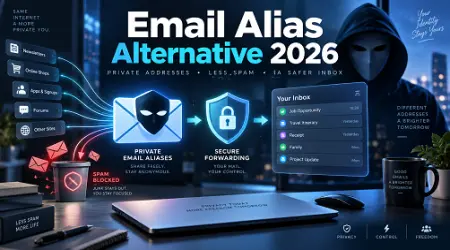
Disposable Inboxes vs. Email Aliases: Which Do You Need?
This is where many beginners get tripped up. There is a massive difference between a disposable inbox and an email alias.
My advice: If you are signing up for a service you might need to log into next week (like Netflix or a software tool), do not use a temporary inbox. Use an alias service like SimpleLogin or Apple’s built-in feature. You will thank yourself later when you need to reset a password.
5 Red Flags When Choosing a Service
Not all fake email generators are created equal. In fact, some are dangerous. Here is what I look out for:
- No HTTPS/SSL: If the site doesn't have a lock icon in the address bar, run. You are exposing your traffic.
- Forced App Downloads: If a site forces you to download an .exe or .apk file just to get an email address, it’s likely malware.
- Public Inboxes: Some services let anyone access an inbox if they know the username (e.g., [email protected]). Never use these for anything containing personal info.
- Slow Refresh Rates: If the inbox takes 5 minutes to receive a code, the verification timer on the website you're trying to access will likely expire.
- aggressive Ad Overload: A few ads are fine (bills have to be paid), but if you can't even find the "Copy" button because of pop-ups, it's not worth your time.
See here…..How to build a personal brand online
Step-by-Step: How to Use a Temp Mail for Secure Verification
Let’s walk through a real-world scenario. Say you want to sign up for a new AI tool to test it out, but you know they’re going to spam you to death.
Step 1: Choose Your Weapon
For an AI tool, I’d recommend EmailOnDeck or Temp Mail. They usually have domains that cycle frequently enough to bypass the initial "bot check."
Step 2: Copy the Address
Open the temp mail site in a separate tab. Click the copy button. Do not close this tab!
Step 3: The Sign-Up
Paste the address into the AI tool’s registration form.
Step 4: The Waiting Game
Go back to your temp mail tab. Hit "Refresh" if it doesn’t appear automatically within 30 seconds.
- Pro Tip: If nothing arrives after 60 seconds, check the "Spam" folder on the temp mail site (yes, even fake inboxes have spam folders).
Step 5: Verification
Click the link. Once you are logged into the new tool, you can close the temp mail tab. Just remember: if you ever forget your password for that AI tool, you can never recover it. That account is now a "burner" account.
Frequently Asked Questions (FAQs)
Q: Can I trace a temp email back to the owner?
Generally, no. Most reputable services do not log IP addresses or personal data. However, legal authorities with warrants can sometimes pressure providers. For 99% of users, it’s anonymous enough.
Q: Why do some websites say "invalid email" when I use these?
They are checking the domain name (the part after the @ symbol) against a blacklist. If you see this, try a different service or use an email alias provider like Firefox Relay, which uses more reputable domains.
Q: Are temporary emails free?
Yes, the vast majority are free. Premium versions usually just offer custom domains (like @yourname.com) or private inboxes, but for basic use, never pay for this.
Q: How long does the email address last?
It varies wildly. "10 Minute Mail" lasts... well, 10 minutes. Others, like Guerrilla Mail, keep the address active forever but delete the emails inside it after an hour.
Q: Can I use temp mail for Facebook or Instagram?
You can, but I wouldn't recommend it. Social media platforms often do "security checks" weeks later. If they send a code to an email you no longer have access to, you will lose your account permanently.
Final Verdict: What’s the Best Choice for You?
The landscape of Temp Mail Alternative 2026 services is vast, but it doesn't have to be confusing.
- For quick, one-time junk: Stick with 10 Minute Mail or EmailOnDeck. They are fast, disposable, and perfect for grabbing a freebie.
- For secure, long-term privacy: innovative alias tools like Proton Pass or SimpleLogin are the new gold standard. They require a tiny bit of setup, but they offer a level of control that generic temp sites can't match.
My honest take? Stop giving your real email to companies you don’t trust. Your attention is valuable—protect it.
Next Step for You: Go try signing up for a newsletter you’ve been avoiding using Proton Pass (or a similar alias tool). Once you see how satisfying it is to toggle that "OFF" switch and kill the spam instantly, you’ll never go back.