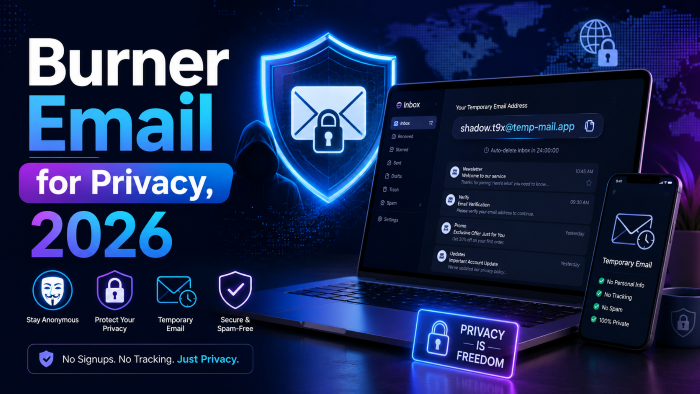
The Ultimate Guide to Using a Burner Email for Privacy in 2026
We’ve all been there. You’re trying to read a single article, download a free PDF, or buy a pair of shoes online, and suddenly you’re hit with a roadblock: "Enter your email to continue."
You hand it over. What’s the worst that could happen?
A week later, your primary inbox is a warzone. You’re getting bombarded with promotional garbage, shady newsletter subscriptions you never opted into, and weird phishing attempts from "Netflix" claiming your account is suspended.
In my experience, your primary email address is the single most valuable piece of digital real estate you own. It’s the master key to your bank accounts, your social media, and your personal identity. Handing it out to every random website in 2026 is like handing your house keys to a stranger on the street just because they offered you a 10% discount coupon.
What most people don’t realize is that the internet runs on a massive, invisible data broker economy. When you use your real email for a quick signup, that address is often bundled, sold, and traded.
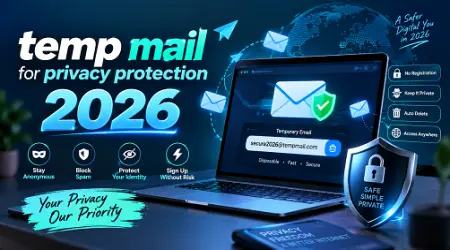
This is exactly why you need a burner email for privacy 2026.
If you want to stop the spam, secure your identity, and take back control of your digital life, learning how to use a temporary email for privacy isn't just an option anymore. It’s a mandatory survival skill. Let’s dive into exactly how to set this up, the hidden digital hacks the pros use, and how to bulletproof your inbox once and for all.
What Exactly Is a Burner Email for Privacy 2026?
At its core, a disposable email address is a proxy. It’s a shield that stands between the wild west of the internet and your actual, personal inbox.
When you use a secure burner email, you are essentially generating a unique, often random email address to give to a website, app, or service. If that service gets hacked, sells your data, or decides to spam you relentlessly, you don't have to spend hours unsubscribing. You simply hit a switch, burn the address, and the spam stops instantly. Your real inbox remains completely untouched and hidden.
But the game has changed significantly recently. A few years ago, a temp mail for signups meant going to a sketchy website, generating an address that destroyed itself in ten minutes, and hoping you could click the confirmation link in time.
Today, an anonymous email service is much more sophisticated. The best privacy email tools now integrate directly into your browser or phone, allowing you to create permanent, easily manageable aliases on the fly.
The Difference Between True Burners and Aliases
To really understand email privacy protection, we need to separate the two main types of protective emails you’ll be using:
1. The "Throwaway" Temp Mail
These are the classic 10-minute emails. You use a fake email for registration on a site you will literally never visit again. It exists just long enough to receive a verification code, and then it vanishes into the digital ether.
2. The Forwarding Alias
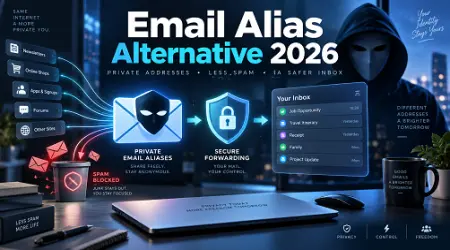
This is the modern, powerful approach. A forwarding alias is a private online signup email that you create and keep. Any mail sent to this alias is automatically forwarded to your real inbox behind the scenes. If the alias starts getting spammed, you log into your dashboard and toggle it off. You retain total control.
Why You Desperately Need an Anonymous Email Address Right Now
After working with countless individuals trying to clean up their digital footprints, I can tell you that the cost of "free" is almost always your data.
Here is exactly why relying on a private email account is the smartest move you can make right now.
1. Stopping the Credential Stuffing Threat
Hackers are lazy, but they are efficient. When a low-security forum or a random e-commerce site gets breached, the attackers steal the database of emails and passwords. Because most people reuse their passwords, hackers take those combinations and automate attacks against major targets like Gmail, PayPal, and banking portals.
If you use a unique disposable inbox for every service, a breach at a random forum only exposes an email address that leads nowhere else. You’ve isolated the blast radius.
2. Defeating Data Brokers and Cross-Site Tracking
Have you ever wondered how Facebook or Google knows exactly what you were shopping for on a completely unrelated website?
Your email address is the ultimate tracking identifier. Companies hash your email and share it across advertising networks to build a terrifyingly accurate profile of your habits. When you hide your real email address and use a different alias for every single service, you break this tracking chain completely. They can no longer link your Amazon purchases to your Reddit account.
3. Ultimate Spam Control
Unsubscribe buttons are often traps. Clicking them frequently just confirms to the sender that your email address is active and monitored, making it even more valuable on the dark web. With a secure temporary email, you don't unsubscribe. You annihilate the bridge.
See here………..How to start a blog that earns money 2026
Real-World Example: How a Private Email Account Saved My Digital Identity
Let me share a quick story that perfectly illustrates why I am so obsessed with this.
A couple of years ago, I wanted to buy a very specific, niche piece of software from a developer I didn't entirely recognize. The software looked great, but the checkout page felt a little unpolished. Instead of using my main work or personal email, I generated a unique alias specifically for that site: [email protected].
I bought the software, received the license key to my real inbox via the forwarder, and forgot about it.
Six months later, my real inbox received a highly sophisticated phishing email pretending to be from my bank. It was incredibly well-crafted. The logo was perfect, the tone was urgent, and the link looked legitimate at a glance.
But there was one massive red flag.
I looked at the "To:" field. The email wasn't addressed to my personal email. It was addressed to [email protected].
That developer’s database had been breached, and hackers were using that specific list to launch targeted financial phishing campaigns. Because I used a burner, I instantly knew the email was a scam. I didn't panic. I just went to my alias manager, deleted the address, and the threat was neutralized.
That is the power of a dedicated, anonymous email address.
The Best Privacy Email Tools to Hide Your Real Email Address in 2026
If you want to implement this system, you need the right tools. Here are the top platforms that are dominating the space right now. Many of these offer free tiers, but if you value your privacy, upgrading to their premium plans is often the highest-ROI investment you can make for your digital security.
1. SimpleLogin (The Heavyweight Champion)
SimpleLogin (now owned by Proton) is arguably the best burner email 2026 has to offer. It acts as an incredible alias manager. You can install their browser extension, and whenever you hit an email field on a website, a little icon appears. Click it, and it instantly generates a unique email address and auto-fills it.
Pro-Tip: If you invest in their premium tier, you can link your own custom domains. This means your burner emails can look like [email protected]. It’s incredibly professional, highly organized, and completely untethered from major tech giants.
2. Apple's "Hide My Email"
If you are deeply embedded in the Apple ecosystem, this is a fantastic, frictionless entry point. Included with an iCloud+ subscription, "Hide My Email" allows you to generate unique, random iCloud email addresses directly from Safari, Mail, or your iPhone settings.
It’s completely seamless, but the downside is that you are locked into Apple’s garden. If you ever switch to Android or a Windows machine, managing these aliases becomes a massive headache.
3. DuckDuckGo Email Protection
This is a brilliant, completely free service for beginners. DuckDuckGo allows you to create an @duck.com address. You can use this as your main forwarding address, but the real magic is their private online signup email generator.
Whenever you are browsing with the DuckDuckGo extension, it can generate private, randomized duck addresses that strip out hidden tracking pixels before forwarding the clean email to your regular inbox. It’s a fantastic middle-ground for everyday users.
4. Addy.io (The Open-Source Alternative)
Formerly known as AnonAddy, this is a darling of the privacy community. It’s open-source, highly transparent, and incredibly lightweight. It operates very similarly to SimpleLogin and is an excellent choice for highly technical users who want fine-grained control over their routing rules and PGP encryption options.
How to Set Up a Secure Burner Email in 3 Steps (Digital Hacks Included)
Ready to lock down your inbox? Here is the exact playbook I use to deploy a temporary email for privacy without slowing down my daily workflow.
Step 1: Choose Your Alias Manager
First, decide if you want to use a standalone alias manager (like SimpleLogin) or a built-in tool (like Apple Hide My Email). I strongly recommend SimpleLogin because it works across all devices, browsers, and operating systems seamlessly.
Sign up for an account. You will need to provide your real primary email address here—this is the destination where all your safe, forwarded emails will ultimately land.
Step 2: Install the Browser Extensions and Mobile Apps
A privacy tool is only useful if it’s convenient. If you have to manually log into a dashboard every time you want to create a fake email for registration, you’ll get lazy and stop doing it.
Install the extension for Chrome, Firefox, or Brave. Download the mobile app on your smartphone and integrate it with your password manager. The goal is to make generating an alias a one-click process.
Step 3: The "Custom Domain" Hack (Advanced but Worth It)
Here is a digital hack that most casual users completely miss. If you rely on the shared domains provided by temp services (like @simplelogin.com), some highly restrictive websites might block them, identifying them as disposable.
To bypass this, register a cheap, unidentifiable domain name (e.g., mail-relay-system.net) from a privacy-respecting registrar. Connect this domain to your alias manager. Now, every burner you create looks entirely legitimate to the website you are signing up for, drastically reducing the chance of your registration being blocked.
Common Mistakes When Using a Temp Mail for Signups
While adopting a secure temporary email strategy is game-changing, there are a few massive pitfalls that beginners fall into. Avoid these at all costs.
Mistake 1: Using "Throwaway" Domains for Important Accounts
Never use a 10-minute self-destructing email for anything tied to money, identity, or long-term access. If you use a quick temp mail to sign up for a crypto exchange, and two years later you need to reset your password, you are completely locked out of your money. Always use a permanent forwarding alias for real accounts.
Mistake 2: Replying Without Checking the "Sent From" Address
If a website sends an email to your burner alias, and you hit "Reply" in Gmail, you risk exposing your real Gmail address. Fortunately, premium tools like SimpleLogin use a technique called "reverse aliasing." They alter the reply-to address so that when you hit reply from your real inbox, it routes back through the proxy, ensuring your real address stays hidden. Always verify this feature is active.
Mistake 3: Overcomplicating Your Naming Conventions
Don't try to memorize your aliases. Let your password manager (like Bitwarden or 1Password) remember them. Generate a random string (like [email protected]) instead of [email protected]. The less identifying information in the address itself, the better.
See here………..Best TH12 Farming Base Layouts in Clash of Clans (Ultimate Guide 2025)
Pros and Cons of a Disposable Inbox Strategy
To keep things perfectly objective, let's break down the realities of managing your digital life this way.
FAQs: Email Privacy Protection
1. Is using a burner email for privacy 2026 illegal?
Absolutely not. Using a temporary email for privacy is completely legal. It is simply a method of routing your mail, much like renting a P.O. Box in the physical world to keep your home address off mailing lists.
2. Will websites know I’m using a disposable email address?
It depends. If you use a highly publicized, free 10-minute mail site, major platforms like Netflix or major banks will flag it and block the registration. If you use a premium alias manager with a custom domain, they will have absolutely no idea it's a proxy.
3. What happens if the anonymous email service shuts down?
This is a valid concern. If a service like SimpleLogin shuts down, you could lose access to your aliases. This is exactly why the "Custom Domain Hack" mentioned earlier is crucial. If you own the domain, and the service dies, you just point your domain to a different provider, and all your aliases continue working perfectly.
4. Can I send emails from a secure burner email, or just receive them?
Yes, you can reply! Modern privacy email tools use reverse aliasing. You reply from your main inbox, the service intercepts it, strips your real address, slaps the alias address on it, and forwards it to the recipient.
5. Should I use a fake email for registration for my bank?
I recommend using a dedicated, high-security alias for your bank, but not a self-destructing temporary email. Create an alias specifically for financial institutions (e.g., [email protected]), and guard the password to your real inbox with your life.
6. Does this replace the need for a VPN?
No. A burner email protects your identity and inbox. A VPN encrypts your web traffic and hides your IP address. For true digital privacy, you should be using both in tandem.
The Bottom Line on Digital Anonymity
Taking control of your digital identity in 2026 isn't about being paranoid; it's about being practical. Data breaches are no longer a rare occurrence—they are a weekly guarantee.
By implementing a simple burner email for privacy 2026 strategy, you instantly drastically reduce your attack surface, eliminate spam, and blind the data brokers trying to monetize your every click.
Take an afternoon this weekend, pick a tool like SimpleLogin or DuckDuckGo, and start shifting your accounts over. It’s a minor habit change that pays massive dividends for your peace of mind.
What’s the absolute worst spam email you’ve ever received because you handed out your real address to the wrong website? Drop a comment below and let me know—and if you found this guide valuable, share it with that one friend whose inbox currently has 40,000 unread messages!