The Ultimate Guide to Using a Temporary Email for Security Testing in 2026
If you’ve ever spent hours manually deleting dummy accounts from a database, you already know the frustration. We've all been there—creating endless variations of our own Gmail addresses just to test a new signup flow.
But what most people don’t realize is that doing this on a large scale is a massive security risk. Using a temporary email for security testing isn't just a convenient shortcut; in 2026, it’s a non-negotiable part of a secure development pipeline.
In my experience working with development and QA teams, the line between a minor bug and a major data breach often comes down to how well an application was isolated during the testing phase. If you're routing test data through personal or corporate inboxes, you are leaving the door open for automated scraping and phishing attacks.
Let’s break down exactly how you should be using a temporary email security testing 2026 strategy, the hidden features most developers ignore, and the practical workflow hacks that will save your team hours of cleanup.
Why Real Inboxes Fail in Staging Environments
When I first started in QA, it was common practice to use real company emails for bug testing. We thought it was fine as long as we were on a staging server.
That was a mistake.
When you use real addresses, you accidentally pollute your analytics, trigger false marketing automation workflows, and run the risk of exposing active corporate emails if the staging environment is ever compromised. A dedicated email testing tool for developers eliminates this risk entirely.
Using a temporary inbox for testing ensures that when you run a script to generate 500 test users, those emails vanish into the ether when the test concludes. There is no cleanup. There is no risk of a rogue outbound email campaign hitting your actual engineering team.
Core Scenarios for Disposable Inboxes
The beauty of a disposable email for app testing is its versatility. Whether you are building the next big SaaS platform or hunting for vulnerabilities, these tools adapt to your workflow.
1. Web App and SaaS Testing
If you are running a temp mail for SaaS testing, your primary goal is checking user flows. Does the welcome email trigger? Does the password reset link work?
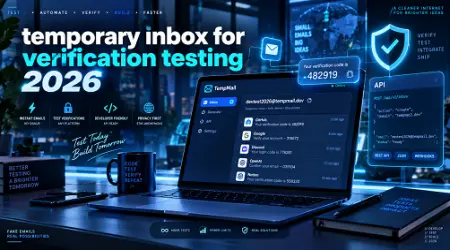
By using a temp mail for web app testing, developers can automate these checks via APIs. You instantly generate an inbox, trigger the app's email, fetch the email content via API to verify the token, and destroy the inbox. It’s clean, efficient, and fully automatable.
2. Cybersecurity and Penetration Testing
Security researchers and ethical hackers rely heavily on anonymity. A temporary email for penetration testing allows you to sign up for suspicious services, probe form fields for injection vulnerabilities, and monitor what the target application sends back without exposing your real identity.
Using a disposable email for cybersecurity testing acts as a burn bag. If the platform you are probing turns out to be malicious and starts spamming or attempting cross-site scripting (XSS) attacks via email payloads, your real infrastructure remains completely untouched.
3. QA and Bug Tracking
For a busy QA tester, setting up test environments needs to be frictionless. A disposable inbox for QA teams means you can run concurrent tests without overlapping credentials.
If you need a temp mail for signup testing to verify edge cases—like what happens when a user inputs special characters in their email address—disposable services let you generate those specific conditions on the fly.
See here……….Best TH12 Farming Base Layouts in Clash of Clans (Ultimate Guide 2025)
The Best Digital Hacks for Secure Email Testing
After working with various staging environments, I’ve picked up a few practical solutions that most users don't know about.
Wildcard Routing is Your Best Friend
Many advanced secure temp mail for developers allow you to set up wildcard domains. Instead of generating a new inbox every time, you can route anything sent to *@yourtestdomain.com into a single, temporary catch-all dashboard. This is a massive time-saver for temp mail for account verification testing.
Look for Ephemeral Storage
Not all temp mail services are created equal. For strict temporary email privacy testing, you need a service that guarantees ephemeral storage. This means the emails are strictly held in RAM and instantly wiped the moment the session closes, rather than written to a hard drive where data fragments could linger.
API Integration for Automated Workflows
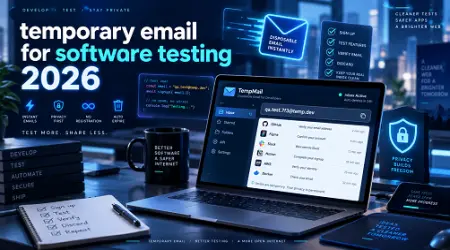
If you aren't integrating your temporary email for software testing into your CI/CD pipeline, you are doing it wrong. The best premium tools offer robust REST APIs.
Pro Tip: While free tools are great for manual checks, investing in a paid, developer-focused temp mail API is usually worth the few dollars a month. It prevents rate-limiting during heavy automated QA sprints and often comes with better uptime SLAs. It's a small investment that pays massive dividends in developer productivity.
Comparing Testing Methods: Real vs. Temp Mail
Common Mistakes When Using Temp Mail for QA
Even with the right tools, I see teams making the same avoidable errors over and over again.
Hardcoding Disposable Domains
Never hardcode a specific disposable domain (like @tempmail.com) into your application’s automated tests. Many temporary email services rotate their domains frequently to avoid spam blacklists. If your test scripts rely on a domain that gets rotated out, your entire CI/CD pipeline will fail. Always fetch the current active domain via the service's API.
Ignoring Email Parsing Limits
When doing a temp mail for bug testing, remember that some lightweight disposable services strip out complex HTML or JavaScript from incoming emails to protect themselves. If you are specifically testing how a highly interactive, dynamic email renders, a basic temp mail service might give you false negatives. Ensure your chosen tool supports full MIME parsing.
Reusing Inboxes for Sensitive Tests
A disposable email for test accounts is public by default on many free platforms. If you generate an inbox named [email protected], anyone else who types in test1 can see those emails. Never use public-tier temp emails to test password resets on live production accounts. Always use private, generated hashes or a premium isolated domain.
A Step-by-Step QA Workflow
To make this actionable, here is the exact sequence I recommend when setting up a temporary email for ethical hacking or routine QA.
- Provision the Inbox: Use your testing framework (like Cypress or Selenium) to call a temp mail API and generate a unique inbox string.
- Execute the App Flow: Have your automated script navigate your web app and input the generated temporary email address into the signup field.
- Wait for Delivery: Pause the script and poll the temp mail API every 3 seconds until the verification email arrives.
- Extract the Payload: Read the JSON response from the temp email service. Use a Regex (regular expression) to extract the verification URL or 2FA code from the email body.
- Complete the Loop: Pass that extracted URL or code back into your app testing framework to finalize the signup.
- Destroy: Send a final API call to immediately delete the temporary inbox, ensuring no data is left behind.
See here………..How to lose weight without dieting
Frequently Asked Questions
What is a temporary email for security testing?
It is an ephemeral, short-lived email address used by developers and security researchers to test application workflows, verify email delivery, or probe for vulnerabilities without exposing real corporate or personal credentials.
Is temp mail safe for penetration testing?
Yes, a temporary email for penetration testing is highly recommended. It acts as an isolated sandbox, preventing target applications from tracing activities back to your real IP or logging your actual contact information.
Can I automate disposable email for app testing?
Absolutely. Most modern temp mail services built for developers offer robust APIs. You can easily integrate them into Selenium, Cypress, Playwright, or Puppeteer to automate account creation and email verification flows.
Why shouldn't I just use Gmail aliases (like [email protected])?
While useful for quick manual checks, Gmail aliases still route to your primary inbox. This creates clutter, risks accidental replies from your real address, and can trigger Google's anti-bot protections if you try to automate hundreds of test signups.
Do temp mail services block attachments?
It depends on the provider. Free, consumer-facing temp mail security researchers use often strip attachments to save bandwidth and prevent malware. Paid, developer-focused tools usually allow you to receive and inspect attachments safely.
Final Takeaways
Transitioning your team to a temporary email for security testing is one of the easiest, highest-ROI changes you can make to your development lifecycle. It cleans up your staging databases, hardens your security posture, and frees up your QA testers to focus on actual bugs rather than managing dummy accounts.
Whether you are running a quick temp mail for signup testing or building a massive, automated test suite for an enterprise SaaS platform, the right disposable email tool is indispensable. Stop treating your personal inbox like a testing sandbox. Protect your data, automate your workflows, and keep your production environments pristine.