THE ULTIMATE GUIDE TO USING A TEMPORARY EMAIL FOR TESTING IN 2026: HACKS, TOOLS, AND QA SECRETS
THE END OF CLUTTERED INBOXES
Have you ever tried testing a new user registration flow, only to realize you have completely run out of clever variations for your personal inbox? You start adding plus signs and random numbers to your daily email address, and before you know it, your primary workspace is an absolute disaster zone of verification links, password resets, and automated onboarding sequences. Look, I have been there, and it is a frustrating way to work.
In my experience, relying on your real inbox for software QA is one of the biggest rookie mistakes you can make. The digital landscape is shifting fast, and finding a reliable temporary email for testing 2026 workflows require is no longer just a nice luxury. It is a fundamental requirement for anyone building, breaking, or verifying software today.
Let us be completely honest. Whether you are a solo developer trying to make sure your new web app actually sends out welcome emails, or a dedicated QA tester running hundreds of automated scripts daily, you need a clean, isolated environment. Today, we are going to dive incredibly deep into exactly how to set up, utilize, and maximize a disposable email for testing, without falling into the common traps that slow development down. Grab a coffee, because we are getting into the real, undocumented tech tips that most users simply do not know.
WHY YOU NEED A TEMPORARY EMAIL ADDRESS FOR TESTING RIGHT NOW
If you are still using your company email or a burner Gmail account to test your application's notification system, you are playing a dangerous game. What most people do not realize is that modern email service providers are incredibly aggressive with their spam filters. When you send fifty password reset emails to the same address in an hour during a testing sprint, Google or Outlook will quietly flag your application's sending domain. Suddenly, your real users are not getting their emails because you ruined your domain reputation during a testing phase.
This is exactly why a temp mail for testing is critical. A dedicated testing environment catches your outgoing mail without ever routing it through public, real-world spam filters. It allows you to inspect the HTML, check the headers, and verify the delivery without impacting your production sender score.
Beyond domain reputation, there is the simple issue of organization. When you use a free temporary email for testing, you keep your workspace clean. You do not have to sift through real client communications just to find that one test verification link you triggered three minutes ago. It separates your work from your testing, which is a massive productivity hack.
UNDERSTANDING THE MECHANICS: HOW A FAKE EMAIL FOR TESTING ACTUALLY WORKS
There is a big misconception that all temporary emails are the same. They are not. When we talk about a fake email for testing in the modern development stack, we are generally talking about two completely different types of tools.
First, there are the consumer-grade disposable inboxes. These are the quick, ad-supported websites where you click a button and get a random string of characters at a weird domain name. These are fine if you are just a regular user trying to download a free PDF without getting spammed. But if you are testing software, these are practically useless. Many modern web applications actually block these known disposable domains from registering at all.
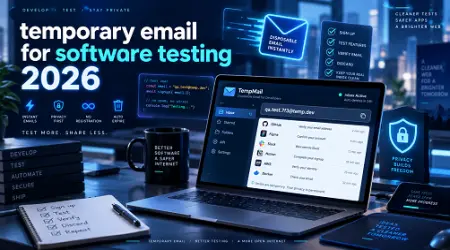
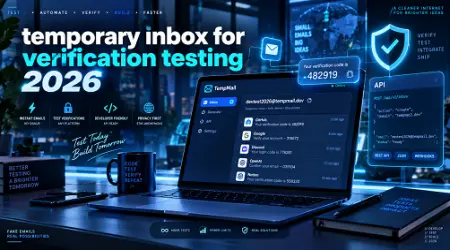
Second, we have the professional email testing tool. These operate as virtual SMTP servers. Instead of sending an email out into the real world, your application sends the email to a localized server that simply catches it and displays it in a dashboard. The email never actually travels across the public internet. This is the gold standard for a temporary email for developers because it is perfectly secure, highly reliable, and easily automated.
Understanding this distinction is the secret to a smooth QA process. You have to match the tool to the task.
TOP FEATURES TO LOOK FOR IN A TEMP MAIL 2026 EDITION
The technology behind testing has evolved. If you are evaluating a new platform or temporary inbox for testing this year, there are a few hidden features and capabilities you absolutely must look for.
1. Catch-All Routing
A great tool allows you to use a wildcard email format. This means you can route anything ending in "@yourtestdomain.com" into a single dashboard. This is a massive time saver for manual testers. You can invent emails on the fly, like "[email protected]", and it all drops right into your central hub.
2. API Access for Automation
If your QA process is not automated yet, it will be soon. The best temporary email for QA testing will provide a robust API. This allows your testing frameworks, like Cypress or Selenium, to programmatically fetch the latest email, extract the verification link, and click it without human intervention.
3. Spam Score Analysis
A high-quality test email address platform will analyze the emails you send it. It will check your HTML structure, flag missing alt text on images, and give you a spam score prediction before you ever deploy to production. This insider knowledge saves you from massive headaches down the road.
4. Team Collaboration
Development is not a solo sport anymore. Your burner email for testing needs to be accessible by the whole team. Shared inboxes mean that when a developer triggers an error, the QA engineer can see the exact email output instantly.
By the way, if you run a digital agency or development shop, standardizing your team on a premium email testing platform is a incredibly smart move. Not only does it speed up your delivery times, but many of these platforms offer agency partner programs. Recommending a solid infrastructure setup to your clients can easily become a quiet, subtle revenue stream, allowing you to monetize your technical expertise without ever sounding salesy or pushing unnecessary products.
See here…………..Best TH12 Farming Base Layouts in Clash of Clans (Ultimate Guide 2025)
STEP-BY-STEP: RUNNING EMAIL VERIFICATION TESTING LIKE A PRO
Let us walk through a practical, real-world example of how to implement this workflow. Imagine you are building a new subscription platform, and you need to ensure that the billing receipt is sent correctly after a successful payment. Here is exactly how an expert sets up email verification testing.
- Step One: Configure Your SMTP Settings
- Instead of pointing your application to SendGrid, Mailgun, or Amazon SES, you point your local or staging environment's SMTP credentials to your chosen testing tool. This redirects all outgoing mail to your safe sandbox.
- Step Two: Trigger the Action
- Go into your staging environment and perform the action as a user. Fill out the checkout form and submit the dummy payment. For the email address, use a newly generated disposable email address from your testing platform.
- Step Three: Inspect the Payload
- Open your testing dashboard. The email should arrive almost instantly since it did not have to traverse the public internet. Now, look past the visual design. Check the underlying HTML structure. Does it render correctly on mobile? Are the variables, like the user's name and the receipt amount, populating dynamically, or are they showing blank code?
- Step Four: Verify the Headers
- This is a tech hack most beginners skip. Look at the raw email headers. Ensure your "Reply-To" address is correct and that there are no exposed internal IP addresses in the routing history.
- Step Five: Automate It
- Once you have done this manually, script it. Use your testing tool's API to have your automated test suite run this exact process every single time new code is merged. This ensures you never accidentally break the receipt system in future updates.
REAL-WORLD CASE STUDY: SAVING 40 HOURS A MONTH IN QA
I want to share a quick story from a project I consulted on late last year. A mid-sized e-commerce company was struggling with their deployment cycle. Every time they updated their checkout flow, a team of four QA testers would manually create dozens of fake Gmail accounts to test the different user states: new customer, returning customer, failed payment, abandoned cart.
They were losing an incredible amount of time just managing these test accounts, dealing with Google's phone verification blocks, and clearing out old messages.
We introduced them to a dedicated temporary email for testing 2026 infrastructure. We swapped their staging environment to route to a virtual testing inbox. Suddenly, those four testers did not need to create accounts anymore. They just typed in random addresses knowing the catch-all feature would grab them.
Within the first month, they documented a savings of over 40 hours of manual labor. More importantly, they caught three critical HTML rendering bugs that only appeared on specific mobile devices, something they never would have seen looking at standard webmail clients. The ROI on moving to a proper testing setup is immediate and undeniable.
PROS AND CONS OF USING A DISPOSABLE EMAIL FOR TESTING
Nothing in tech is perfect, and we need to look at both sides of the coin. Understanding the limitations of your tools is what separates the juniors from the seniors.
The Pros:
- Zero impact on your domain sender reputation. You can send thousands of test emails without fear of being blacklisted.
- Absolute privacy. Your personal and work inboxes remain completely free of development clutter.
- Advanced debugging features. You can inspect raw HTML, check responsive designs, and analyze spam scores in real-time.
- Automation readiness. APIs make it incredibly easy to integrate into continuous integration pipelines.
The Cons:
- It does not simulate real-world delivery times. Because the emails route locally to a virtual server, you will not experience the natural delays that happen when sending to a real Yahoo or Outlook address.
- Free tiers are often limited. While a free temporary email for testing exists, the features required by serious developers usually sit behind a paywall.
- No long-term storage. These inboxes clear themselves out frequently. If you need to keep a test email for compliance records for six months, a temporary solution is the wrong choice.
COMMON MISTAKES DEVELOPERS MAKE WITH TEST EMAIL ADDRESSES
After working with dozens of development teams, I see the same recurring errors when it comes to email QA. Avoid these pitfalls at all costs
.
Mistake 1: Using Public Temp Mails for Client Data
This is a massive security risk. Never send real client data, database exports, or actual user details to a public disposable email provider. Anyone who guesses the URL can see that inbox. Always use secure, private testing environments when dealing with sensitive information.
Mistake 2: Hardcoding Test Addresses in Production Code
You would be amazed how often a developer hardcodes a test email address into a carbon-copy field to monitor the system, and forgets to remove it before launching. Suddenly, a random temporary inbox is receiving thousands of live customer receipts. Always use environment variables for your email routing.
Mistake 3: Ignoring the Spam Analysis
Developers often just check if the email arrived and if the link works. They ignore the tool's warning that the email contains broken links, missing text versions, or spam-triggering language. The testing phase is the time to fix these deliverability issues, not after marketing complains about open rates.
See here……Top digital marketing strategies that work
FREQUENTLY ASKED QUESTIONS
Question: What is the main difference between a disposable email and a temporary email for developers?
Answer: A disposable email is usually a public web interface meant to help everyday users avoid marketing spam when signing up for websites. A temporary email for developers is a localized virtual server that catches outgoing application emails for debugging purposes without actually sending them over the public internet.
Question: Can I use a temporary email for QA testing if I do not know how to code?
Answer: Absolutely. While developers use the API features, manual QA testers can easily use the web interfaces provided by these platforms. It works exactly like a regular inbox visually; you just configure your software to send emails to it instead of real addresses.
Question: Will using a temp mail for testing affect my live users?
Answer: No, and that is the entire point. By routing your staging and local development environments to a testing tool, you isolate your messy QA traffic away from your production servers, protecting your live users and your domain reputation.
Question: How long do emails stay in a temporary inbox for testing?
Answer: It depends entirely on the provider and your subscription tier. Free tools might wipe the inbox every 10 minutes or every time you close the browser. Paid, professional tools might retain logs for 30 days to help you track down historical bugs.
Question: Are there any good free options available in 2026?
Answer: Yes, platforms like Mailtrap and Mailinator still offer solid free tiers that are perfectly adequate for solo developers or hobby projects. However, once you need team collaboration or high-volume API access, you will need to look at premium plans.
CONCLUSION AND YOUR NEXT STEPS
We have covered a massive amount of ground today, from the basic mechanics of how a fake email for testing operates, to the advanced automation strategies used by top-tier engineering teams. The era of cluttering up your personal Gmail account with "+test" aliases is over. In 2026, building robust, reliable software requires professional tools, and a dedicated testing inbox is at the very top of that list.
If there is one thing you take away from this guide, it should be this: isolate your environments. Protect your domain reputation fiercely, automate your verification clicks, and stop wasting your valuable time manually managing dummy accounts. The technology is here, it is accessible, and it will radically transform how quickly you can ship reliable code.
I am curious to hear about your workflow. What is the most frustrating bug you have ever caught during email verification testing, and how much time would a dedicated tool have saved you? Drop a comment below, share your experiences, or hit reply. Let us keep leveling up our digital workflows together!