Why Your Temp Mail Is Not Receiving Verification Emails (And How to Fix It in 2026)
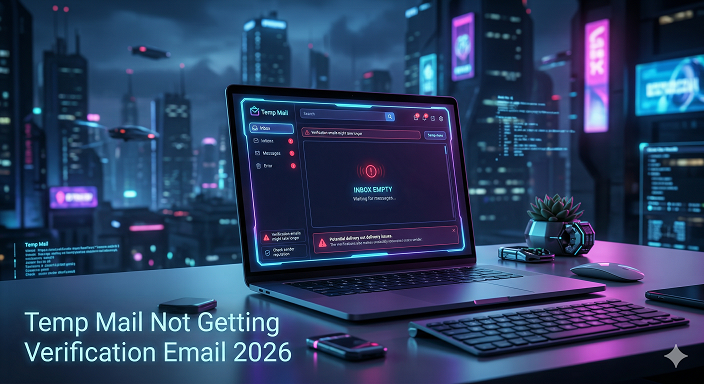
Have you ever stared at a blank screen, relentlessly clicking the refresh button, just waiting for a simple confirmation link to arrive? You are definitely not alone. It is incredibly frustrating when you are just trying to access a quick download, test out a new piece of software, or sign up for a forum, only to find your temp mail not receiving verification email messages.
Back in the day, grabbing a quick disposable address was the ultimate digital hack. It was an instant, foolproof way to protect your real inbox from an avalanche of promotional spam. You would copy the fake address, paste it into the signup form, and within seconds, the OTP (One-Time Password) would appear. But the internet landscape has shifted dramatically. In 2026, platforms have gotten significantly smarter. Security systems are more aggressive, and that simple trick does not work as smoothly as it used to.
If you are currently pulling your hair out wondering why your temporary email not working is suddenly a daily occurrence, you need to understand what is happening behind the scenes. Websites are actively fighting back against disposable inboxes.
In this guide, I am going to walk you through exactly why this is happening, the hidden mechanics of email verification, and the practical workarounds you can use right now to bypass these roadblocks.
THE CORE PROBLEM: WHY IS TEMPORARY EMAIL NOT WORKING ANYMORE?
What most people don’t realize is that there is an invisible arms race happening every time you fill out a signup form. On one side, you have everyday users who just want to keep their primary inbox clean. On the other side, you have massive tech companies, streaming services, and social networks that desperately want your real data.
To these companies, a real email address is incredibly valuable. It is a direct line to market to you, track your behavior, and build a digital profile. When you use a temporary inbox, you are cutting off their access to that value. Furthermore, bad actors use disposable emails to create bot accounts, spam forums, and abuse free trials.
Because of this, companies have invested millions into sophisticated anti-fraud systems. We are seeing major disposable email issues 2026 because the filters are no longer just looking at the email address itself; they are analyzing the reputation of the entire domain hosting that email. If a website detects a domain associated with a known temp mail provider, it throws up a brick wall.
TOP REASONS FOR A TEMP MAIL VERIFICATION PROBLEM
To actually fix the issue, you have to know which specific roadblock you are hitting. In my experience, the problem usually boils down to one of these four scenarios.
- The Domain is Blacklisted (Temp Mail Blocked by Websites)
This is the most common reason for a fake email not receiving OTP. Companies use massive, constantly updated databases of known temporary email domains. Services like Spamhaus or internal security tools scan the domain part of the email (the part after the @ symbol). If you are using a widely known service, the website recognizes it instantly. They will let you click "Submit" on the signup form so you think it worked, but their server will intentionally refuse to send the email. They "silently drop" the request to prevent bots from knowing they were caught. - Inbox Refresh Delays (Temp Mail Delay Issue)
Sometimes, the email actually is sent, but the temporary mail server is overwhelmed. These free services handle millions of incoming emails every hour. When server traffic spikes, the processing time slows to a crawl. You might think your inbox is broken, but in reality, the temp mail delay issue just means the email is sitting in a massive digital traffic jam. - Aggressive Spam Filtering by the Temp Service
Ironically, temp mail providers have to use their own spam filters to prevent their servers from crashing due to malicious attacks. Sometimes, a legitimate verification email gets flagged by the temp service's own security protocols. The email arrives, but the temp service deletes it before it ever shows up on your screen. - Session Expiration
Most disposable inboxes have a very short lifespan. Some only last ten minutes. If the website you are signing up for has a slow email delivery system—which is common for smaller websites or forums—your temporary inbox might expire and self-destruct before the email even arrives.
HOW TO FIX TEMP MAIL INBOX NOT UPDATING (STEP-BY-STEP)
If you are stuck right now and desperately need to receive verification email temp mail, try these practical steps. I use these exact methods when I am testing software platforms for clients.
Step 1: Switch the Domain Name
Most popular disposable email providers offer a dropdown menu to change the domain extension. If you are using a default domain that has been flagged, simply click the option to generate a new address with a different, lesser-known domain. Newer domains have not been added to blacklists yet.
Step 2: Force a Manual Refresh
Do not rely on the auto-refresh feature of the website. Sometimes the background scripts crash in your browser. Manually click the "Refresh" button on the webpage, or do a hard refresh of your browser tab to force the server to pull the latest data.
Step 3: Check Your Network and Ad Blockers
What most people don’t realize is that aggressive ad blockers and privacy extensions (like uBlock Origin or Privacy Badger) can sometimes block the javascript required for the temp mail inbox to update on your screen. Pause your ad blocker temporarily and refresh the page to see if the email magically appears.
Step 4: Use a Niche Temp Mail Provider
If you use the first result on Google for "temp mail," you are using the exact same service as millions of other people. That means those domains are highly toxic to website filters. Dig a little deeper. Find a page-two or page-three temporary email provider. The more obscure the service, the higher the chance their domain hasn't been blacklisted yet.
IN MY EXPERIENCE: A REAL-WORLD EXAMPLE
A few months ago, I was working with a startup that needed to set up dozens of software testing accounts. We wanted to isolate these accounts from our main corporate server, so we defaulted to using a popular temporary email generator.
For the first three accounts, it worked flawlessly. But on the fourth attempt, we hit a wall. We requested the verification code, but the inbox stayed entirely empty. We waited twenty minutes. Nothing. We tried why temp mail not receiving emails searches, thinking the service was down.
Here is the digital hack we discovered: the software platform we were signing up for wasn't just checking a static blacklist. It was tracking the IP address making the signup requests. Because we were creating multiple accounts from the same IP using known disposable domains, their security system shadow-banned our session.
The fix? We connected to a reputable VPN, cleared our browser cookies, and used a completely different, lesser-known temporary email provider. The verification email came through in three seconds. The lesson here is that websites look at the entire context of your signup attempt, not just the email address itself.
See here……TH13 Best Home CoC Base
WHAT MOST PEOPLE DON'T REALIZE ABOUT VERIFICATION SYSTEMS
To truly master this, you need to understand how trust scores work on the internet. Every email domain has an invisible reputation score.
When you type an email into a signup box, the website's server performs a lightning-fast background check. It queries the Domain Name System (DNS) to look at the Mail Exchange (MX) records. If those MX records point back to a server known for hosting throwaway accounts, the trust score plummets to zero.
Furthermore, many modern platforms use AI-driven fraud detection. If you fill out a complex signup form in 1.2 seconds, the system knows you are likely using a bot or a script, and it will intentionally fail to send the OTP, regardless of what email address you used. Acting like a normal human—taking a few seconds to type, moving your mouse naturally—can actually improve your chances of the verification email being triggered.
RELIABLE TEMP MAIL ALTERNATIVES FOR 2026
If you are tired of the constant temp mail verification problem, it is time to upgrade your strategy. Disposable emails are a band-aid. Email aliases are the actual cure.
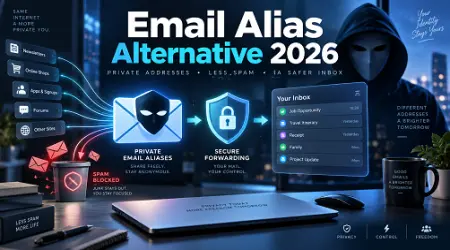
An email alias is a forwarding address. It looks entirely real to the website you are signing up for, but any email sent to it automatically forwards to your real, private inbox. If that company starts sending you spam, you simply click a button to deactivate that specific alias, cutting them off forever.
Here are the best strategies to use today:
- Dedicated Alias Services
Tools like SimpleLogin or AnonAddy are absolute game-changers. They allow you to generate unique, realistic-looking email addresses on the fly. Because these services use high-quality, shared domains (or allow you to plug in your own custom domain), they bypass almost all standard blacklists. Many privacy-focused users invest in the premium tiers of these services. It is a subtle but highly effective way to manage your digital life, and frankly, paying a couple of dollars a month for a premium alias tool or a bundled VPN service is the best investment you can make for your inbox sanity. - The Gmail Plus Addressing Hack
If you need a quick fix and don't care about total anonymity, use the plus-addressing trick. If your email is [email protected], you can enter [email protected] into a signup form. Gmail ignores everything after the plus sign and delivers it to your main inbox. You can then set up a filter in Gmail to automatically send anything addressed to that specific "plus" email straight to the trash. Note that some smarter forms have caught onto this and will block the "+" symbol, but it still works surprisingly well on older sites. - Password Manager Integrated Emails
Many modern password managers (like 1Password or Bitwarden) now partner with alias providers. When you are creating a new login credential, the password manager will automatically offer to generate a unique email alias right alongside your strong password. This is the ultimate workflow hack for keeping your real identity hidden without relying on sketchy temporary mail sites.
PROS AND CONS OF USING DISPOSABLE EMAILS
To give you a balanced view, let's break down the reality of using standard temporary inboxes today.
PROS:
- Immediate access: No signup required to generate an address.
- Zero inbox clutter: Keeps your personal email entirely free of promotional garbage.
- Total anonymity: You don't have to provide any real information to get the address.
- Good for one-off downloads: Perfect for accessing a PDF lead magnet you never want to hear from again.
CONS:
- High failure rate: Frequently blocked by modern websites and apps.
- Security risks: Anyone who knows the temporary address can access the inbox while it is active, meaning they could potentially reset your passwords.
- Account loss: If you sign up for a service and get logged out, you cannot reset your password because the temporary email is gone forever.
- No historical record: You lose access to welcome emails, license keys, or important initial communication.
See here……How to build a personal brand online
COMMON MISTAKES BEGINNERS MAKE WITH FAKE EMAILS
After helping hundreds of people clean up their digital security habits, I see the same errors repeated constantly. Avoid these traps:
Mistake 1: Using Temp Mail for Important Accounts
Never, ever use a disposable email for a bank account, a main social media profile, or any software you actually plan to use long-term. If the platform requires you to verify your identity a month later, or if you forget your password, you are locked out permanently.
Mistake 2: Leaving the Tab Open Expecting Privacy
Most free temp mail services are public. If you generate an address like "[email protected]," anyone else who types in "apple123" can see your inbox. Do not use these services to receive anything containing sensitive personal data, financial details, or private links.
Mistake 3: Giving Up After One Try
If your inbox isn't updating, beginners often assume the website is broken. As we discussed, the issue is almost always domain reputation. Your first instinct should be to change the domain extension or try a completely different provider.
Mistake 4: Ignoring the Power of Custom Domains
If you are running a business or doing serious testing, buy a cheap domain name for two dollars and route it through a catch-all email forwarding service. It gives you infinite, perfectly credible temporary emails that will never be blocked by a blacklist.
FREQUENTLY ASKED QUESTIONS (FAQS)
Why do companies block temporary emails?
Companies block them to prevent spam, stop users from abusing free trials, and ensure they have a legitimate way to contact you for marketing and data collection purposes.
How can I tell if a website has blocked my temp mail?
Usually, the website will not tell you directly. They will accept the email on the signup form, but the verification code will simply never arrive. This silent rejection is the most common indicator of a blacklist.
Are email aliases safer than temporary emails?
Yes, absolutely. Email aliases forward to your real, secure inbox, meaning only you have access to the contents. Temporary emails are often public and highly insecure.
Can I recover a deleted temporary email address?
No. Once a disposable email session expires or the server wipes its data, that inbox and all its contents are permanently destroyed. This is why they should never be used for long-term accounts.
Does clearing my cache help receive delayed emails?
Clearing your cache won't make the email arrive faster on the server side, but hard-refreshing your browser can sometimes fix local display glitches where the inbox visual interface has frozen.
What is the best alternative to a blocked temp mail?
Using a dedicated email forwarding service like SimpleLogin, Apple's Hide My Email, or a custom catch-all domain are the most reliable methods that won't trigger security filters.
CONCLUSION AND FINAL TAKEAWAYS
Dealing with a temp mail not receiving verification email situation is a modern annoyance we all have to face. The internet of 2026 is highly protective of user data, and the days of fooling major platforms with a generic throwaway address are largely behind us.
However, by understanding how these domain blacklists work, recognizing when a site is silently dropping your request, and utilizing smarter tools like email aliases, you can maintain your digital privacy without the constant headache of missing OTPs. Stop relying on the most famous disposable services, start exploring dedicated forwarding tools, and take back control of your inbox.
What has been your experience lately? Have you found a specific obscure email provider that consistently bypasses the filters, or have you made the switch to a premium alias service? Drop your strategies and hidden digital hacks in the comments below, and let's figure out how to stay one step ahead of the spam filters together!